
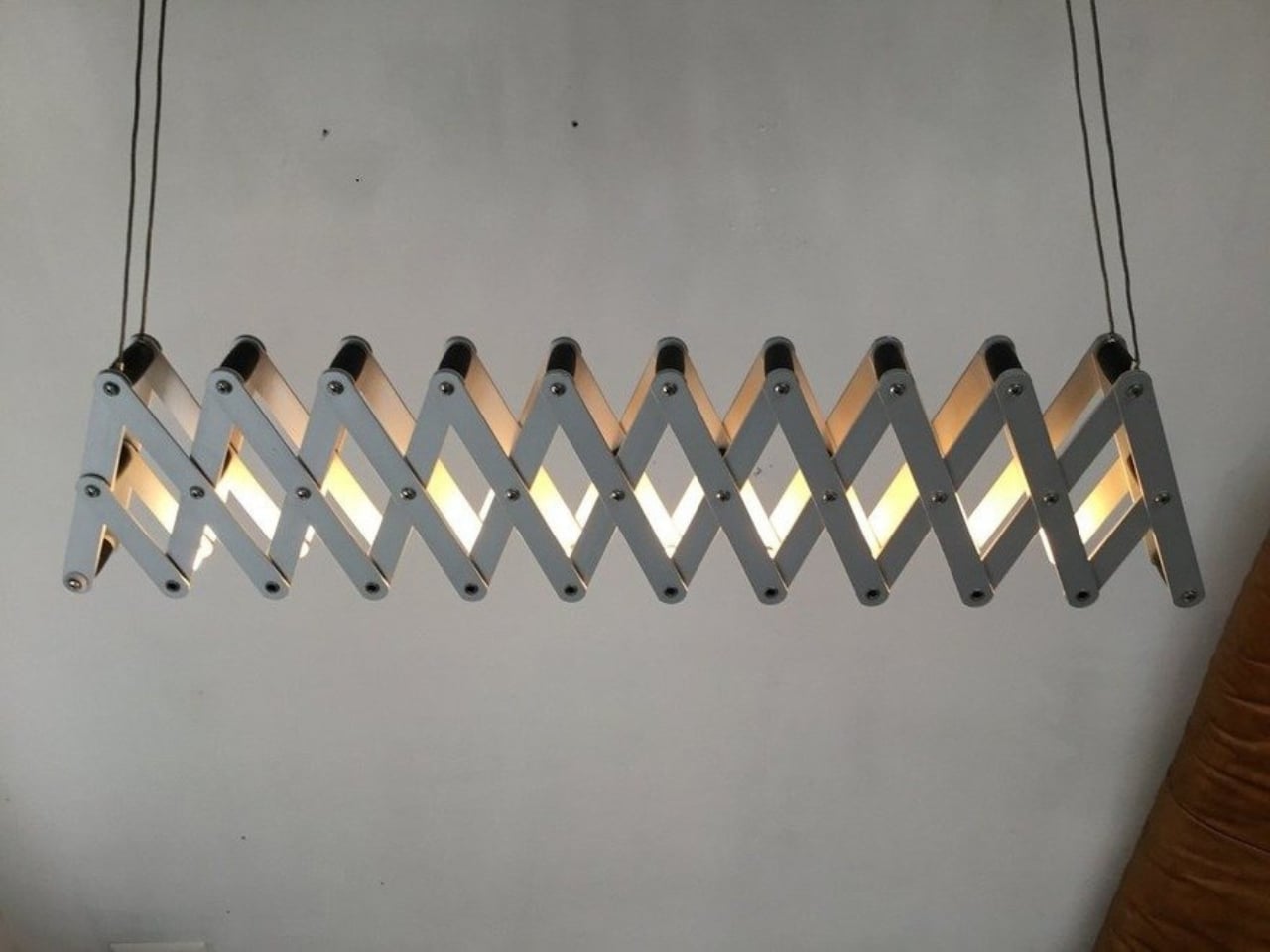
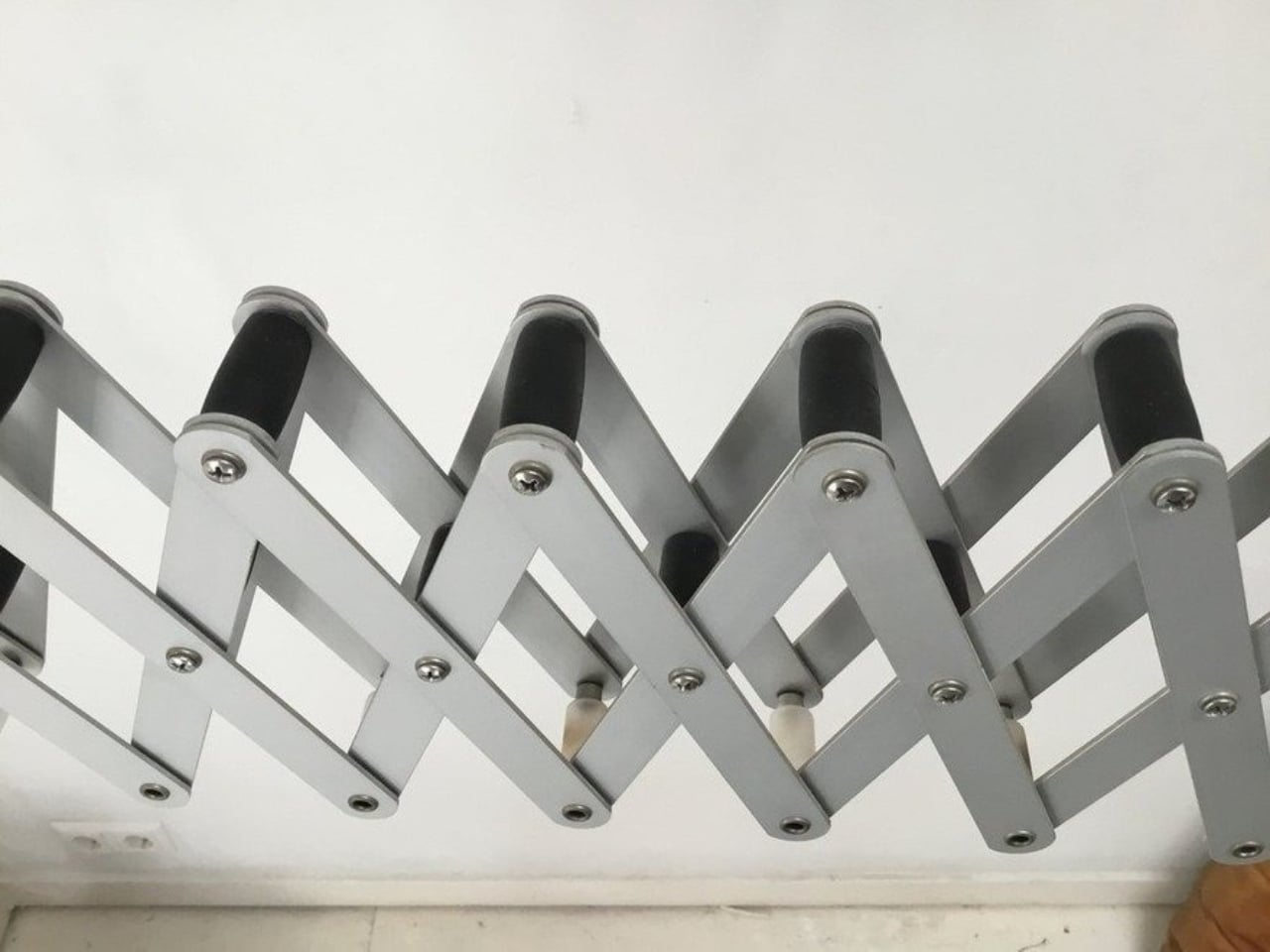
Some design ideas are so quietly right that they take decades to find their full audience. Oliver Michl’s Architect’s Lamp from the 1980s is exactly that kind of piece. It is a ceiling-mounted light that borrows its entire visual logic from equal space dividers, the spring-loaded drafting tools that architects and engineers use to plot perfectly even intervals across a surface. The concept sounds almost too clever when you say it out loud. And yet, the moment you see it, it just makes sense.
Michl designed the lamp during a very specific cultural pivot. The 1970s had been all about flowing, organic plastic forms. Soft curves, warm earth tones, a kind of material optimism that felt almost comforting. Then the 1980s arrived and jolted design in the opposite direction. Hard lines, industrial materials, a theatrical confidence in structure that felt almost confrontational compared to what came before. Michl, a German lighting designer who would later found Lucelab in Berlin, built the Architect’s Lamp squarely in that spirit. Steel and aluminum, full articulation, no softness anywhere.
Designer: Oliver Michl (Lucelab)
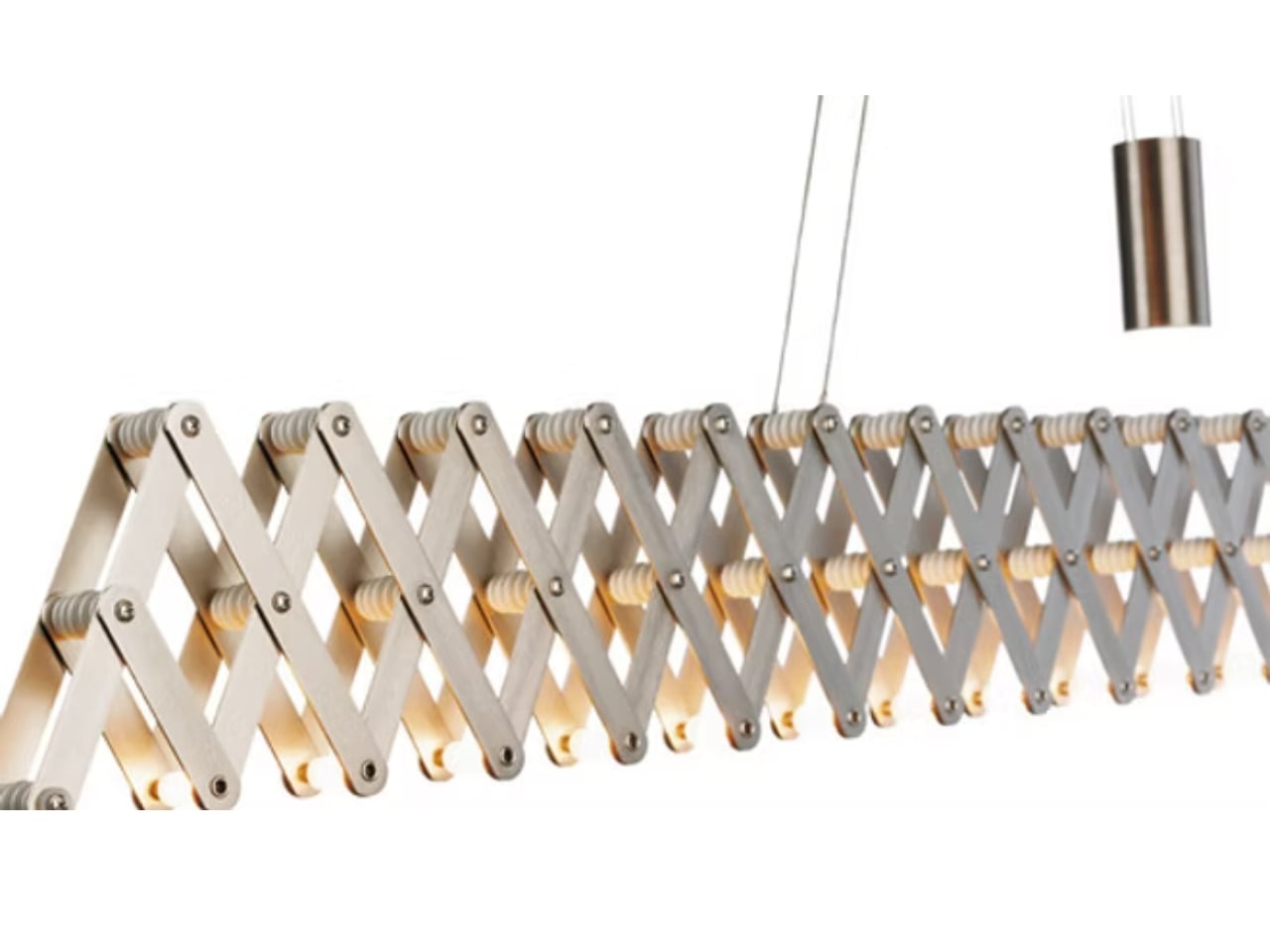
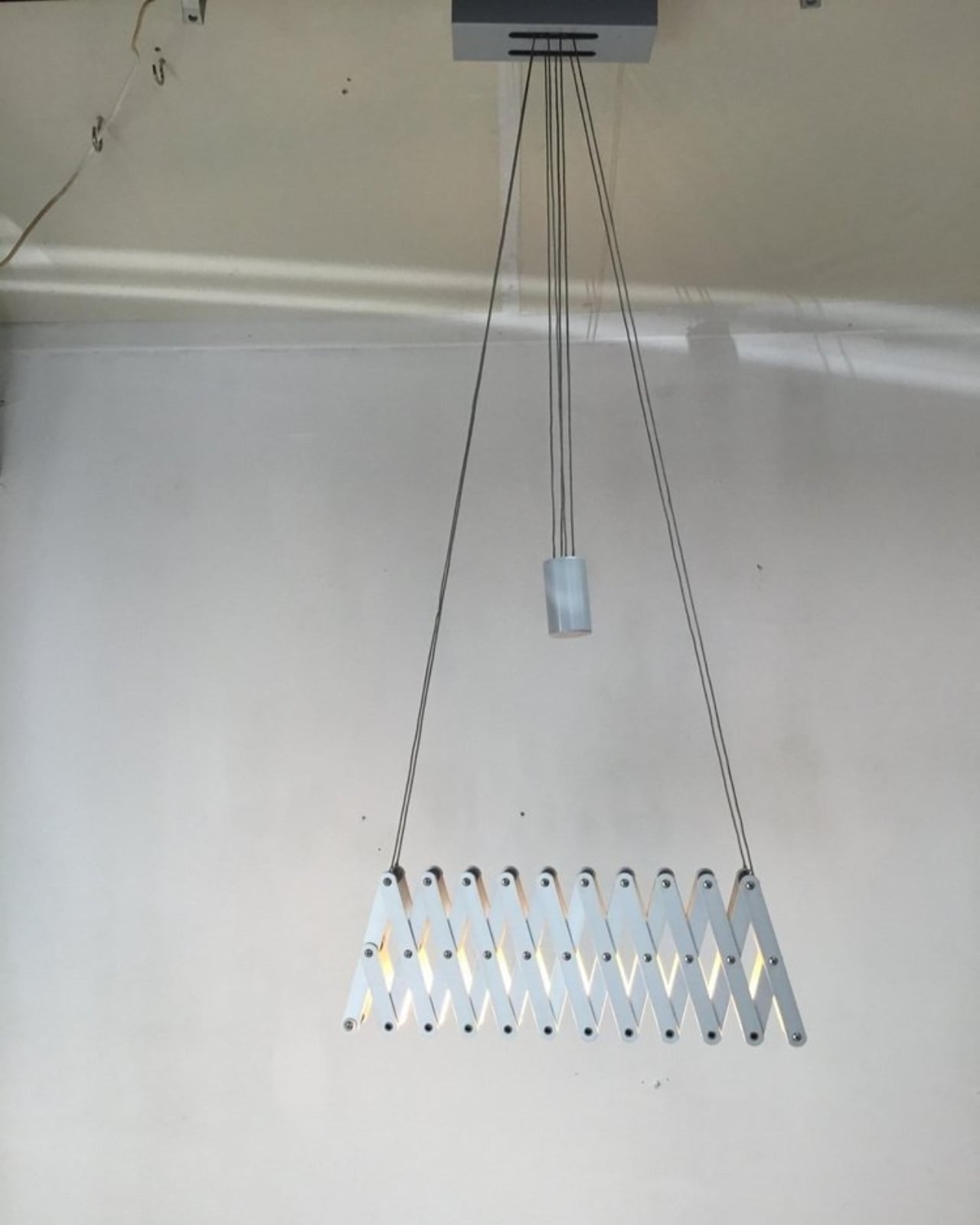
What makes the lamp genuinely interesting, beyond its visual bravado, is how it actually functions. The scissor-like expanding structure allows the piece to adjust both in height, ranging from about 41 to 79 inches, and in width, from 41 to 60 inches. Because it hangs from the ceiling rather than sitting on a desk or floor, the light it casts is ambient rather than task-focused. This was never a reading lamp. It was always a statement, and a rather bold one. Michl made the deliberate choice to take a mechanism that belongs at a drafting table and scale it up for overhead use. That kind of lateral thinking, the willingness to transplant a tool from one context and drop it into a completely different one, is harder than it looks. Most attempts at it feel gimmicky. This one feels inevitable.
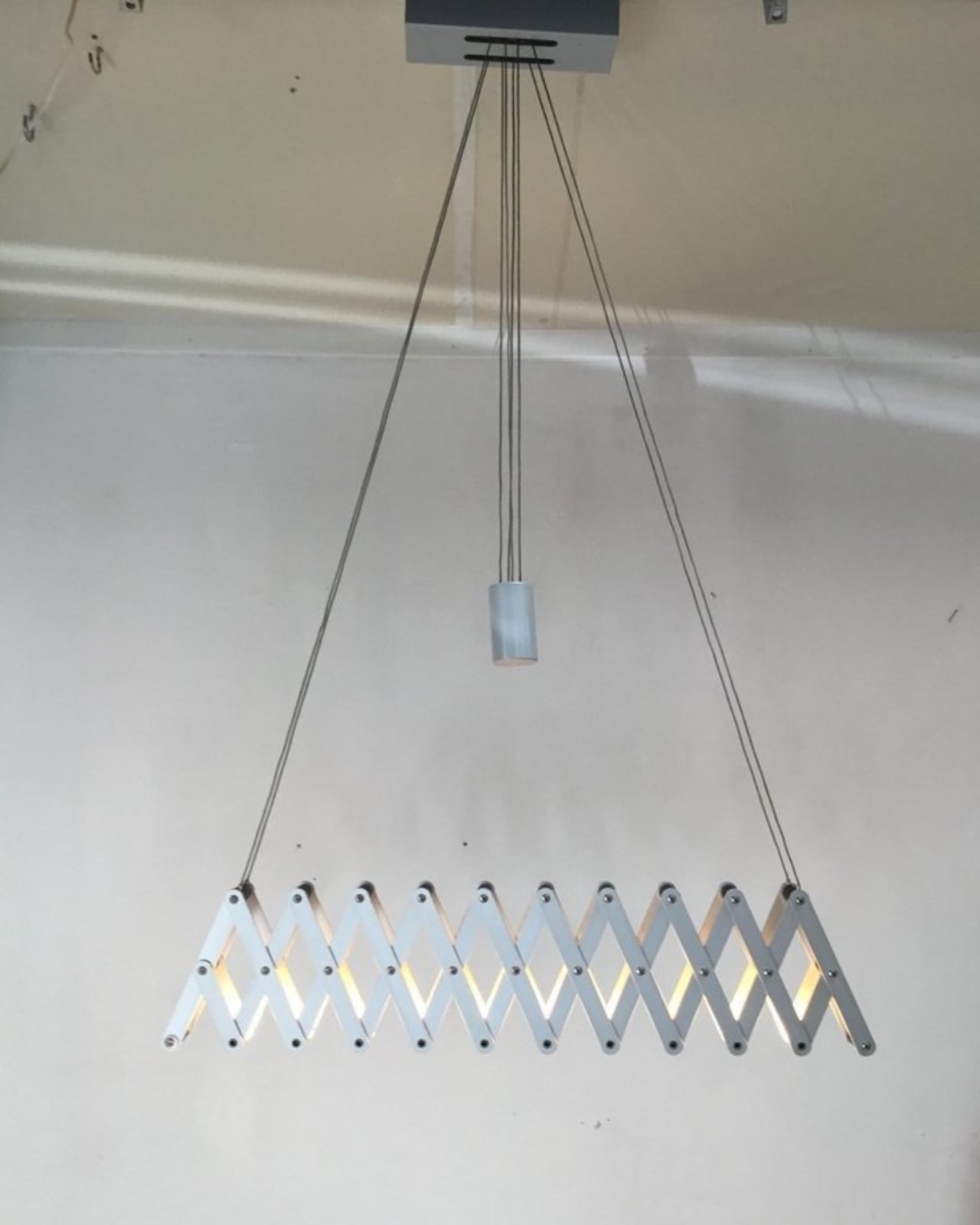
There is a particular intelligence in designing a lamp that operates like this. Most lighting from that era leaned one way or the other, either purely functional or purely decorative, rarely both at the same time. The Architect’s Lamp refuses that binary entirely. It performs, and it reads as kinetic sculpture. The expanding grid of its structure, when viewed from below, creates a repeating geometric pattern that visibly shifts with every adjustment. You are not moving a lamp. You are editing a composition, and that distinction matters more than it might sound.
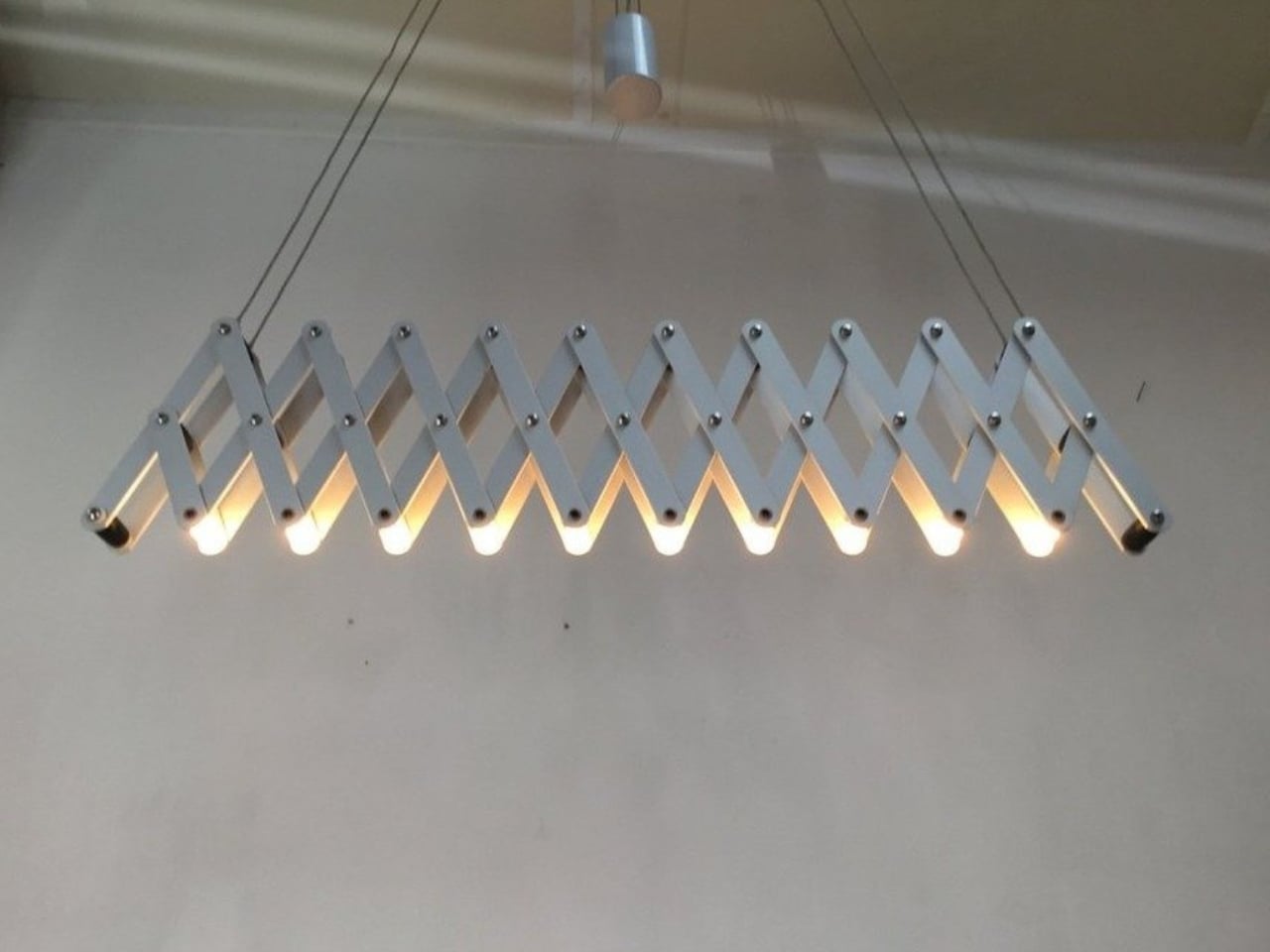
Michl has always worked at that intersection of function and spectacle. His FleXXXibile luminaire, also produced under Lucelab, became a cult object among designers for similar reasons. It features a concertina lattice that can be precision-aimed at a specific point, and it has never really left the design conversation. The Architect’s Lamp arrives at the same sensibility from a different angle. Both pieces suggest a designer who finds moving parts not just practical but genuinely compelling. The mechanism, in Michl’s work, is always part of the message.
The lamp currently lives at Blackman Cruz, the Los Angeles gallery that specializes in exactly this kind of historically significant object. It is listed at $5,500, which is real money, but it is also an original piece from Germany, circa 1980, in steel and aluminum. It has survived four decades intact, which tells you something. The pieces that do not hold up tend to disappear. The ones that keep getting rediscovered tend to deserve it.
The reason this lamp keeps resurfacing in design conversations right now is not nostalgia. It is recognition. The industrial-meets-sculptural vocabulary that dominates so many contemporary interiors, the hard edges, the mechanical articulation, the idea that a light fixture can function as architecture, all of it circles back to what Michl was already doing forty years ago. He was early, and the design world was not paying close enough attention. The Architect’s Lamp is a reminder that some of the most interesting ideas do not announce themselves loudly. They just wait.
The post The 40-Year-Old Lamp That Still Looks Like the Future first appeared on Yanko Design.