
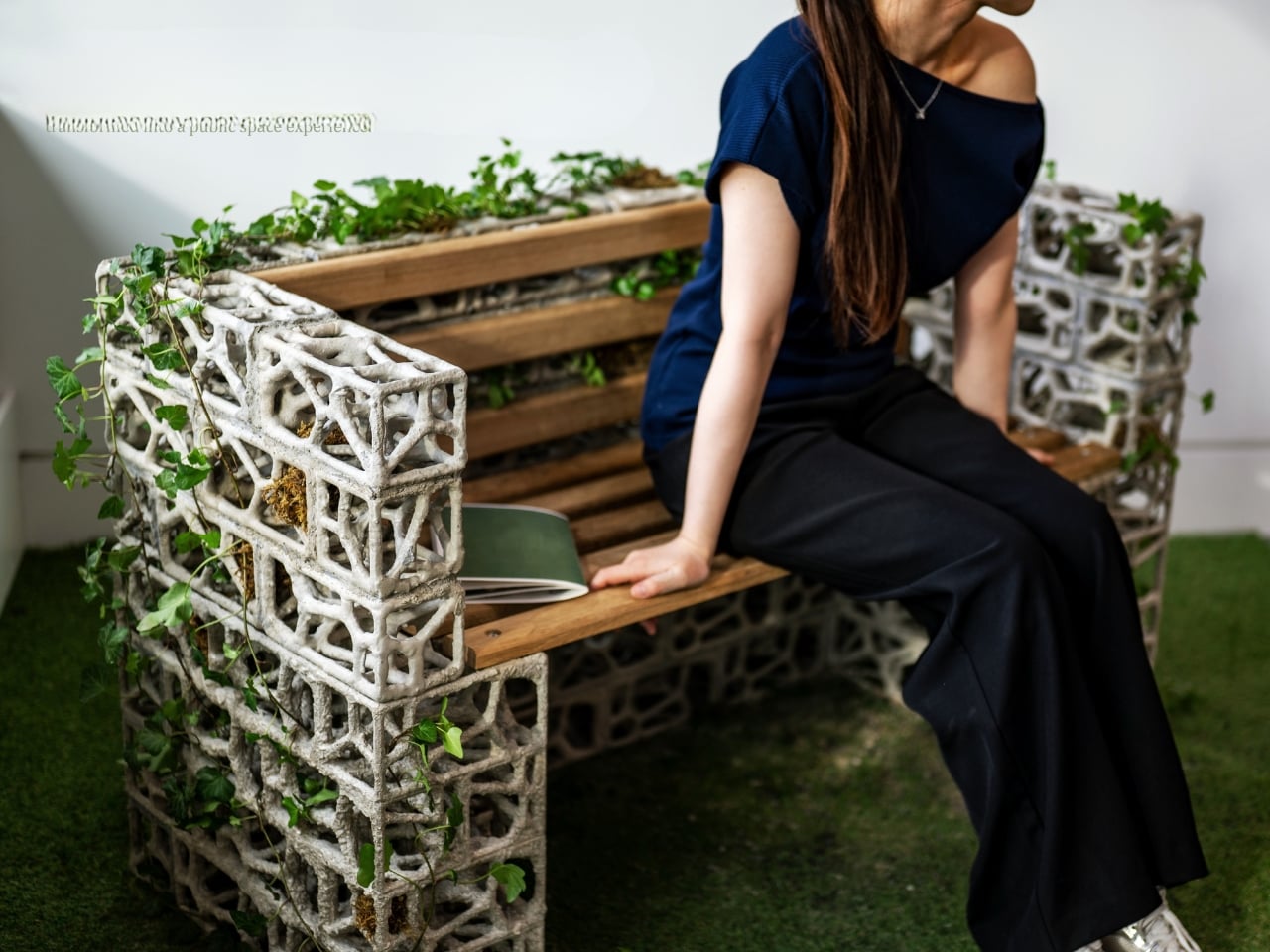
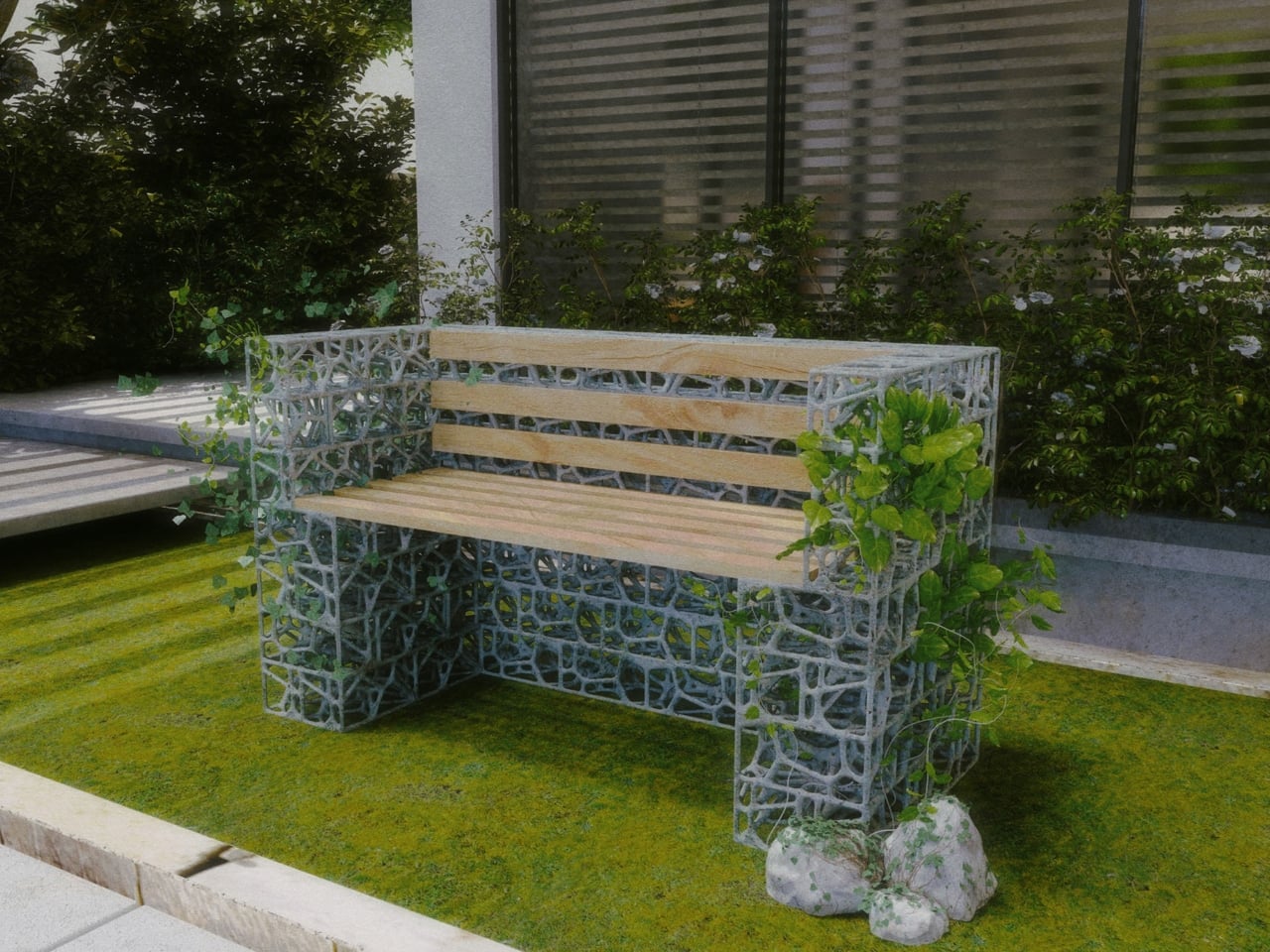
When I first came across the PhytoSymbiosis Seat, it looked like a piece of architecture that had been left in a garden long enough to transform into something else entirely. That’s not an insult. It’s the point. Designed by a student at the Royal College of Art and recently recognized by the NY Product Design Awards, this outdoor bench is one of those rare design concepts that makes you stop and rethink a question you didn’t know you were asking. The question, in this case, is: what if public furniture didn’t just sit in nature, but actually participated in it?
The bench was developed over nine months of community observation in London. The designer spent that time watching how people move through public green spaces and noting the growing disconnection between urban residents and the natural environments around them. To get the material details right, they consulted botanists at Kew Garden and invited residents near Westfield Park to touch and evaluate plant samples firsthand. That kind of patient, place-based research tends to produce something more honest than a concept born entirely at a drafting table, and you can feel it in the outcome.
Designer: Royal College of Art
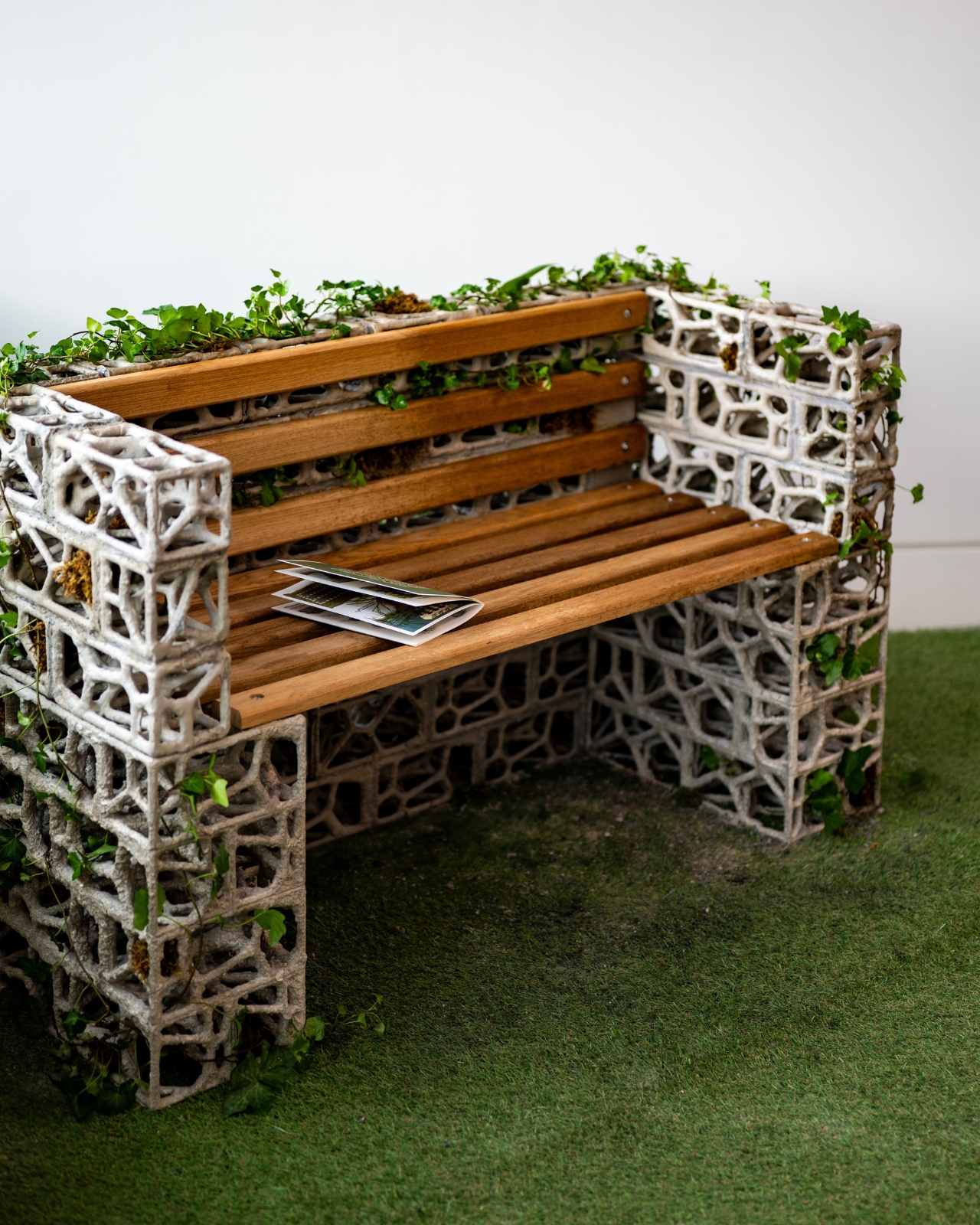
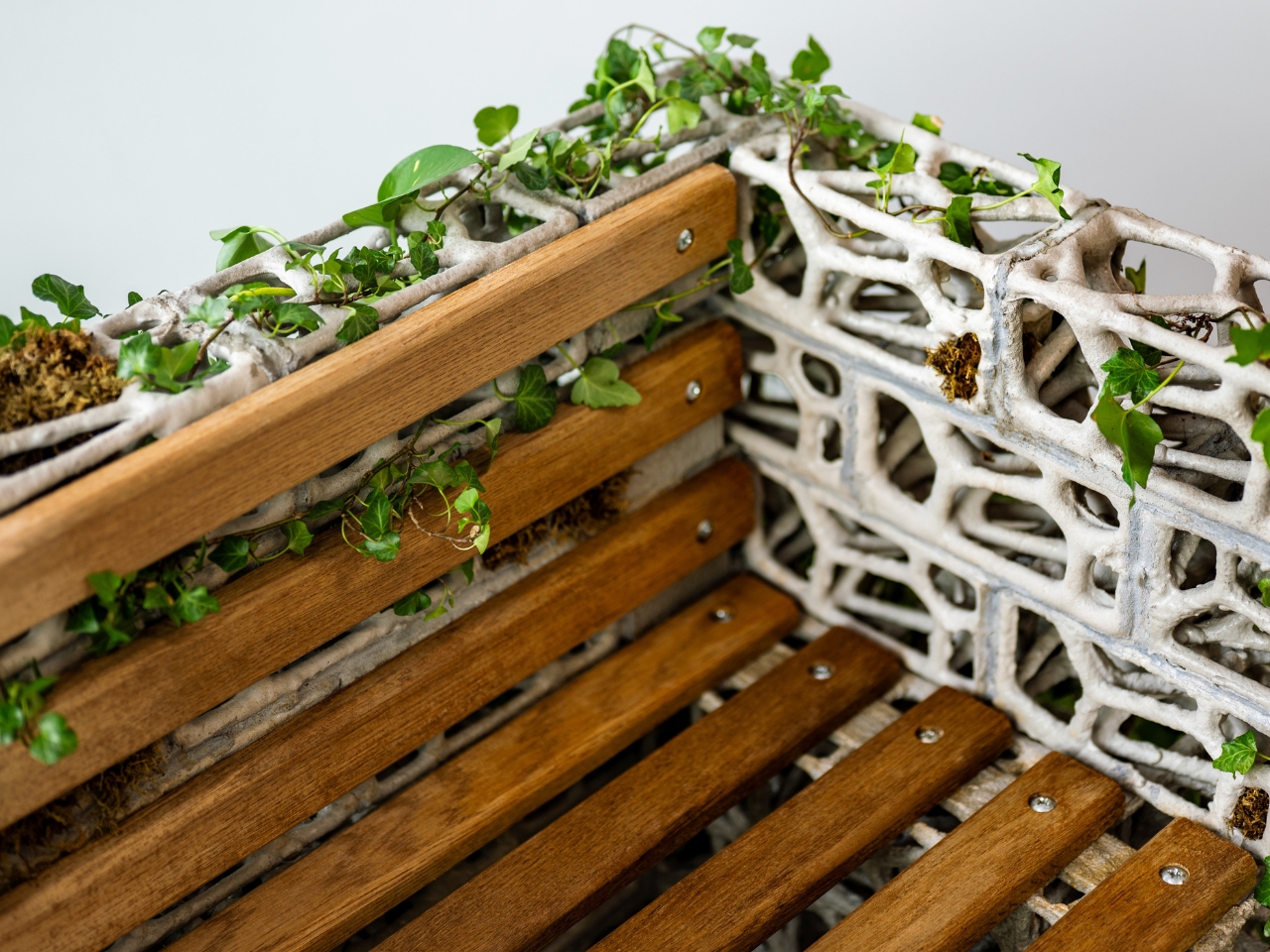
The frame is made from bio-concrete bricks with a porous surface structure. The porosity isn’t decorative. It was specifically engineered through material experiments to give English ivy something to grip. The ivy’s aerial roots, which can reach a density of 30 to 40 roots per 10-centimeter stem section, attach naturally to the rough concrete surface, forming a composite structure that gets stronger over time rather than weaker. That last part is worth sitting with: most public furniture degrades. This bench, in theory, consolidates. The plant’s growth actually reinforces the structure rather than working against it.
The form itself comes from Voronoi geometry, the same spatial patterns that govern how plants distribute resources and compete for space in nature. Those lacy, cellular shapes in the frame are not just aesthetic. They were calculated to accommodate the physical behavior of climbing plants, guiding and supporting ivy as it grows across and through the structure. The parametric modeling was verified with a finite element analysis to ensure the whole thing would hold together structurally. There’s real engineering behind what looks, at first glance, like a beautiful accident of nature.
But the part of this project that keeps pulling me back is the social layer, and I think it’s the most underappreciated dimension of the design. The bench is built to be cared for by the people who use it. Residents are meant to water it, to guide the ivy’s direction of growth, to make small decisions over time that shape what the bench becomes. A water level sensor built into the system even triggers user interaction by signaling when the plant needs attention. This turns an act of sitting into an act of tending, and tending, as anyone who has ever kept a plant alive will tell you, creates a very specific kind of attachment.
The pilot results support this. Volunteer participation in surrounding neighborhoods increased by 40 percent. Carbon emissions were reduced by 62 percent compared to traditional furniture. The plant palette is 100 percent native species, supporting local biodiversity without the risk of invasive growth. Neighbors reportedly gather around the bench, exchanging knowledge about plant care and falling into conversations they might not have had otherwise. These aren’t incidental benefits. They were built into the project’s goals from the start, aligned with the UN’s Sustainable Development Goals and measurable enough to take seriously.
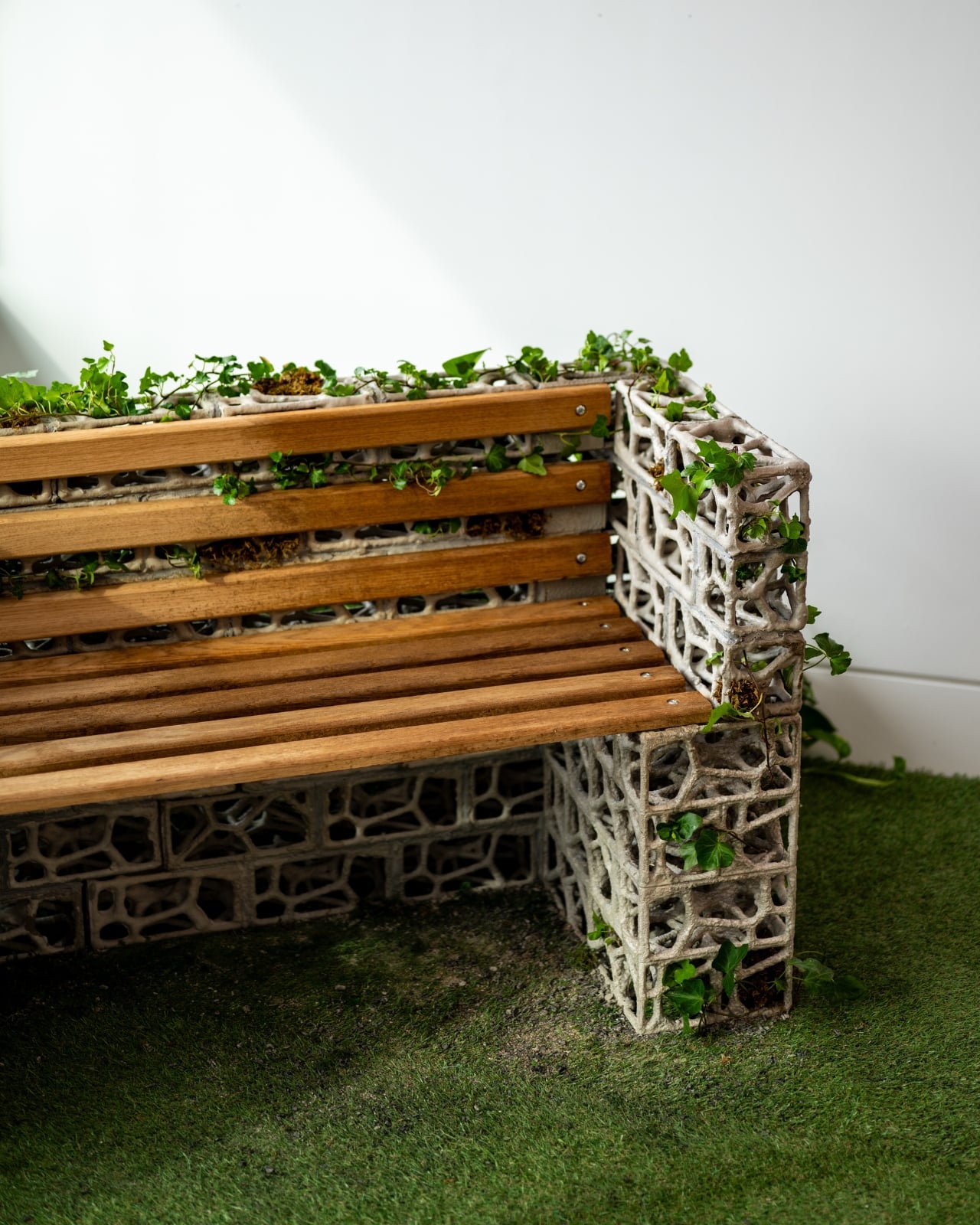
What gets me is how quietly radical this is. Public benches are usually passive objects. We sit on them, we ignore them, we move on. The PhytoSymbiosis Seat makes the bench a responsibility, a neighborhood project, a small stake in the life of a shared space. It asks something of the people who encounter it, and in asking, it gives something back: a reason to notice, to return, and to care. That, more than any material innovation, might be its most lasting design achievement.
The post The Bench That Grows Stronger Every Time You Water It first appeared on Yanko Design.