
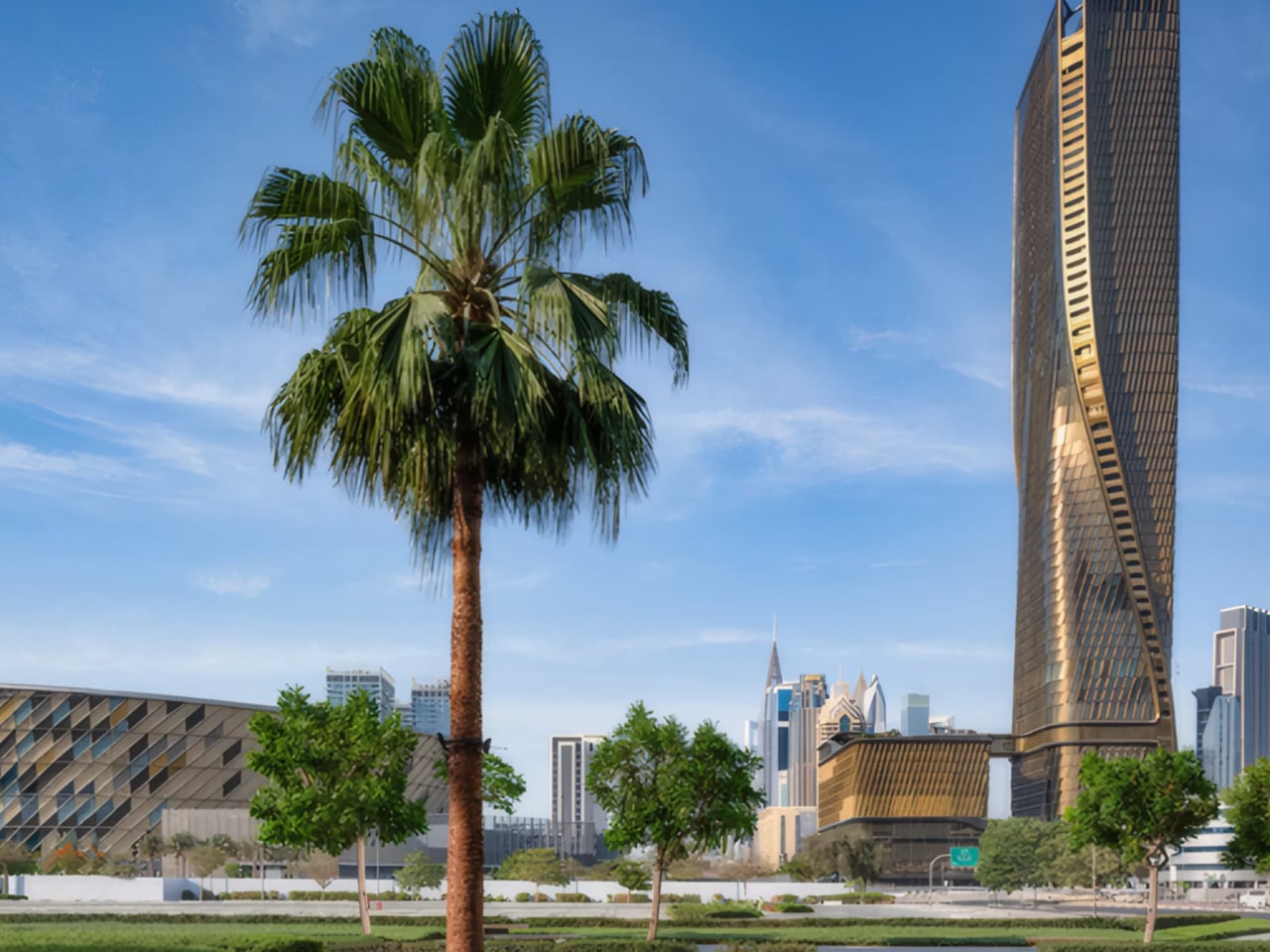
There’s a building rising on Sheikh Zayed Road that isn’t trying to be the tallest thing in the room — it’s trying to be the most alive. The Wasl Tower, designed by UNStudio in collaboration with structural engineers Werner Sobek, stands 302 metres above Dubai and carries with it one of the most thoughtful design narratives in the city’s recent skyline story. Conceived as early as 2014 and nearing completion, the 64-storey supertall is a landmark in the truest sense, not just because of its height, but because of what it means to stand there.
The tower draws its form from classical sculpture. UNStudio looked to the ‘contrapposto’, a Renaissance-era pose in which a figure shifts weight and twists slightly at the torso, suggesting movement mid-stride, and scaled it to 302 metres. The result is a building that appears to rotate as you move around it, its geometry shifting with every vantage point. Structurally, this feat is achieved through three massive 300-metre shear walls linked by four strategic outriggers, a system that allows the building to twist gracefully while still supporting a fully flexible, mixed-use floorplate.
Designer: UN Studio
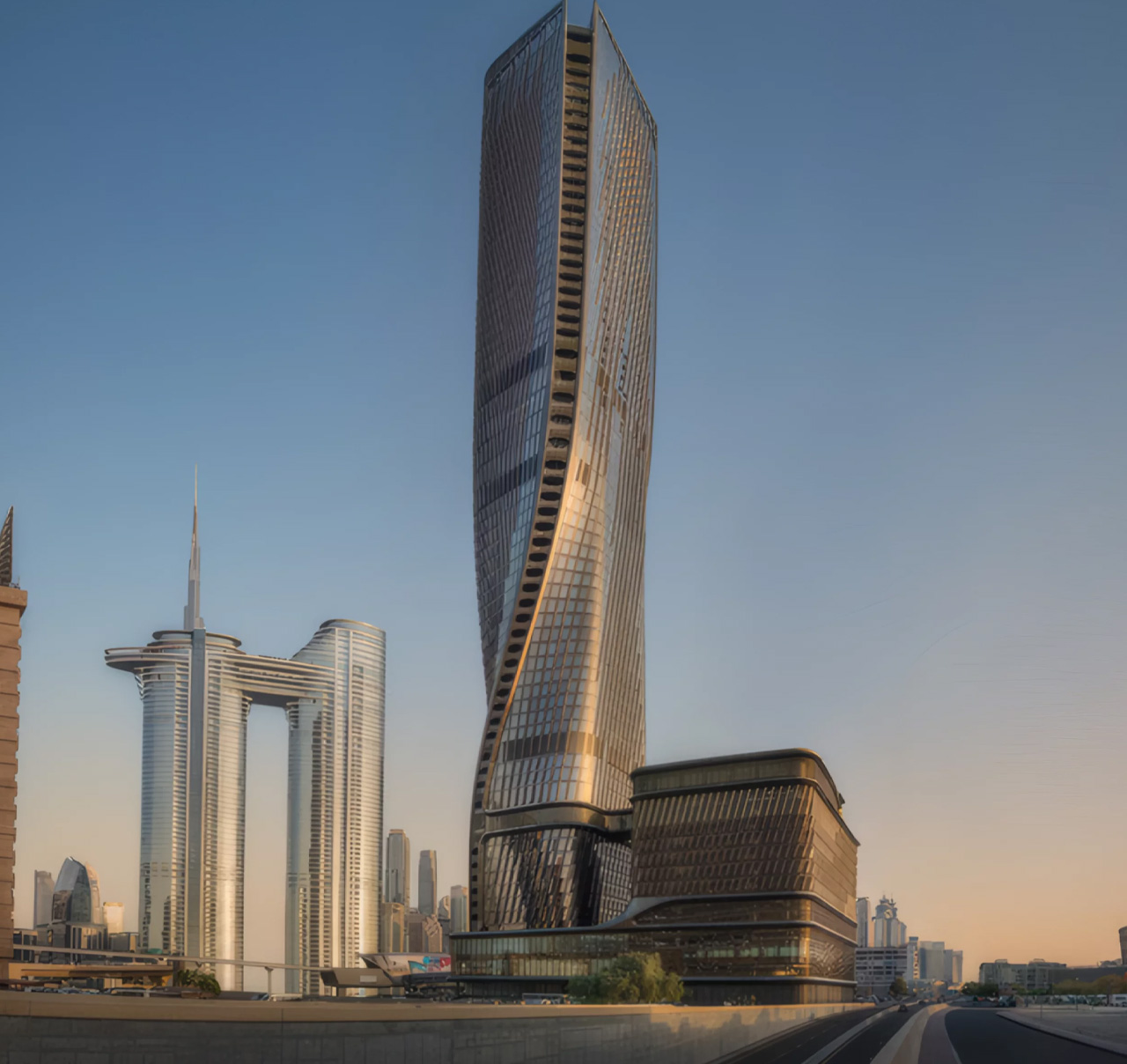
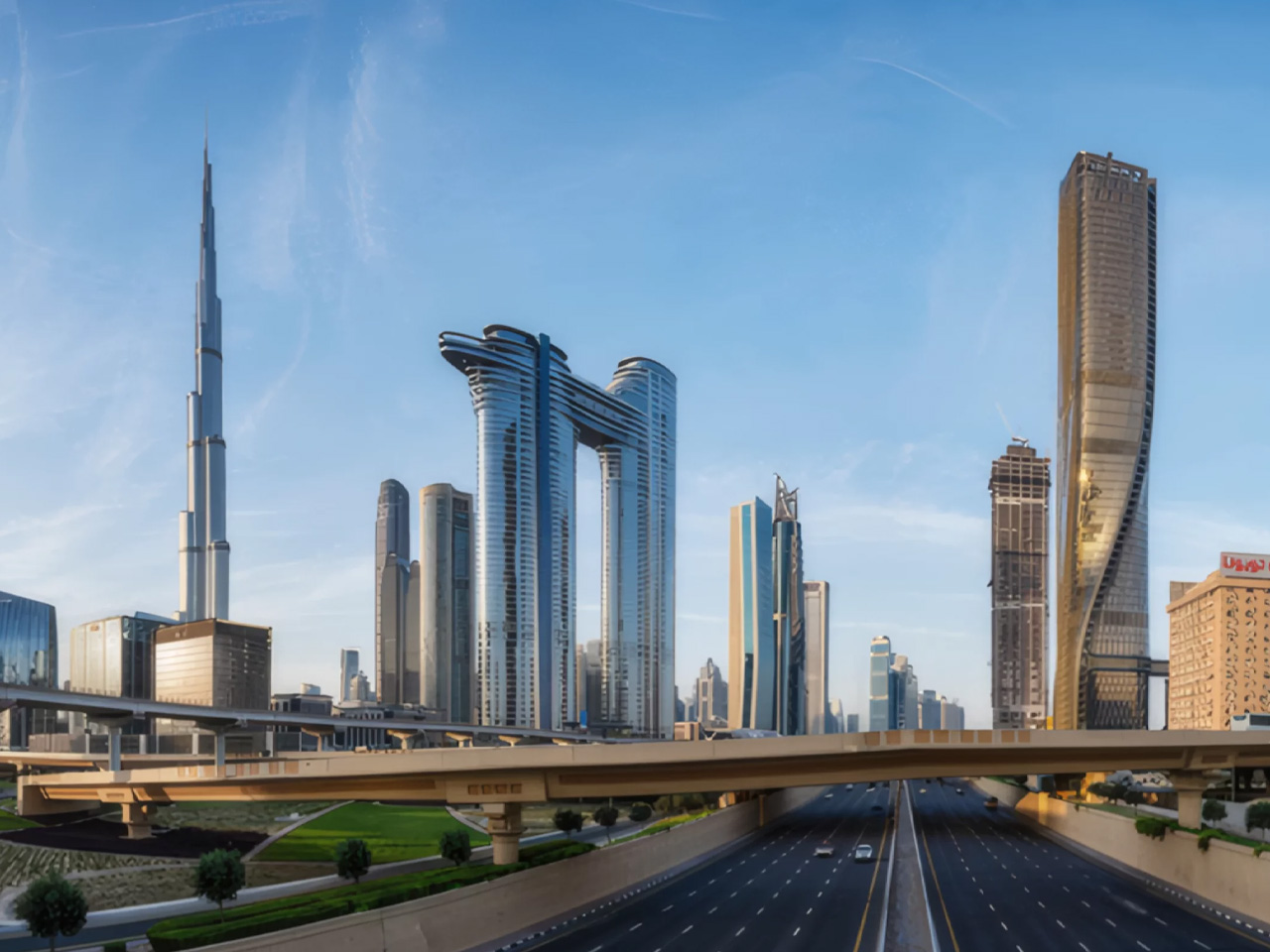
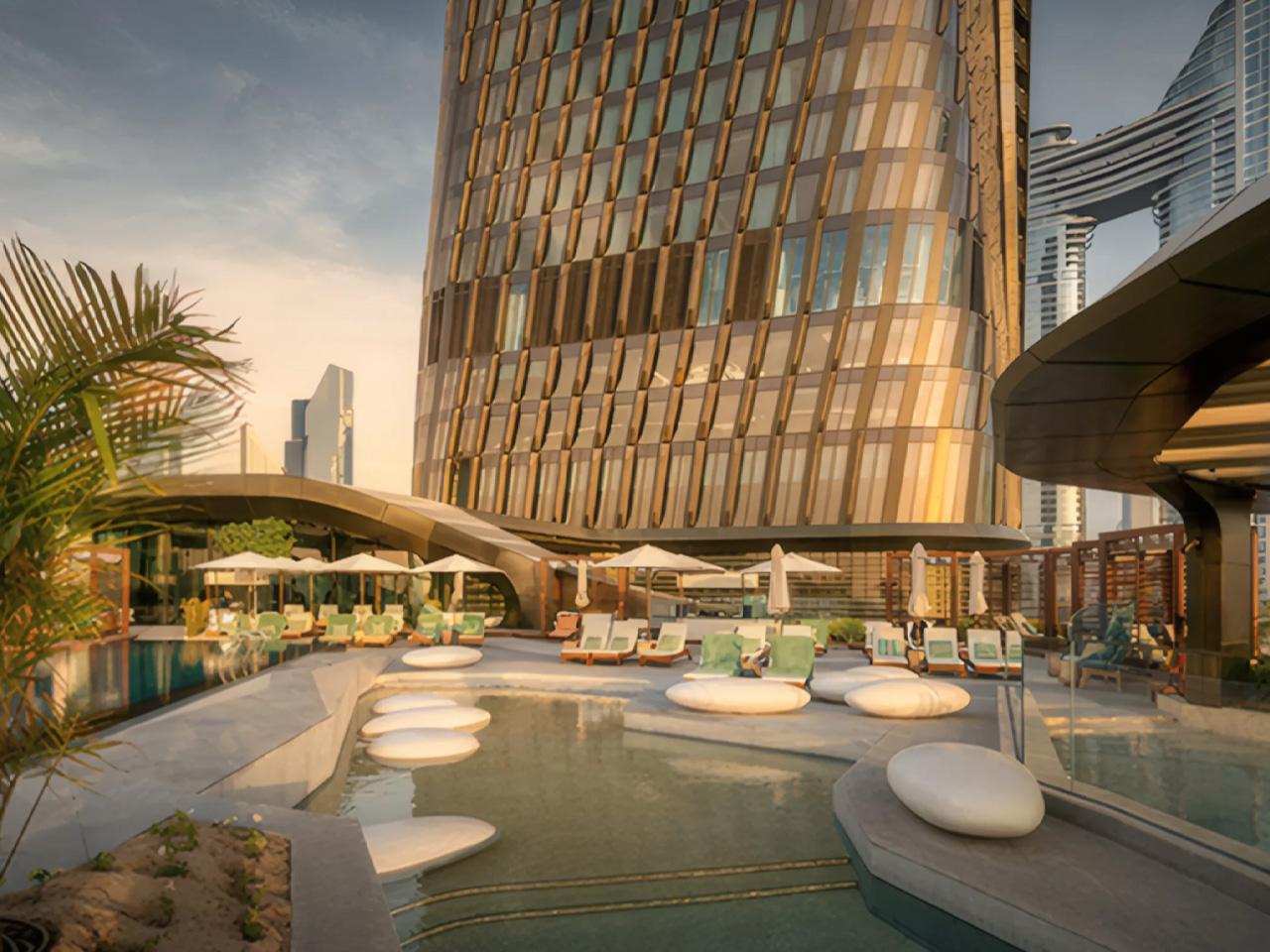
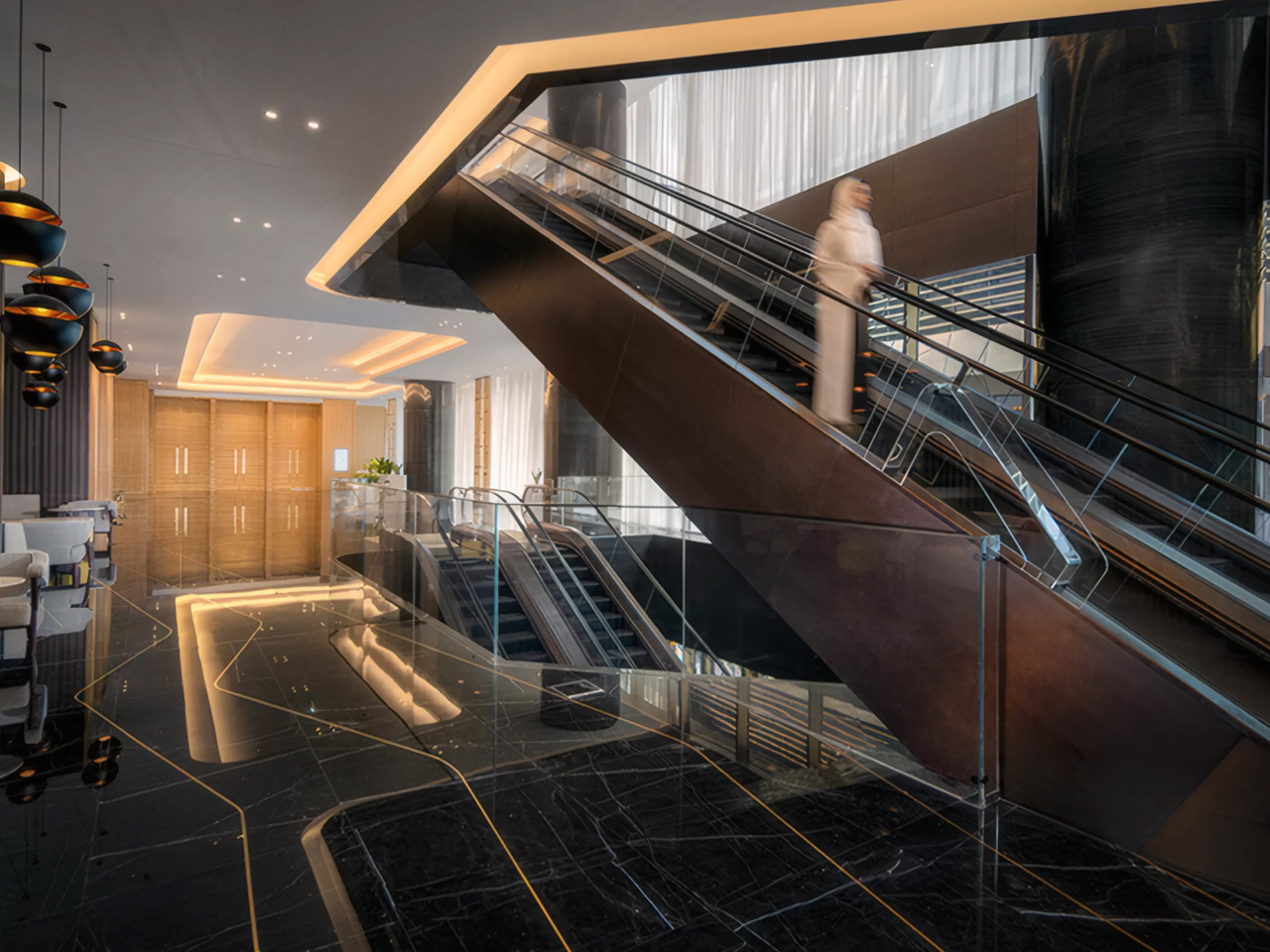
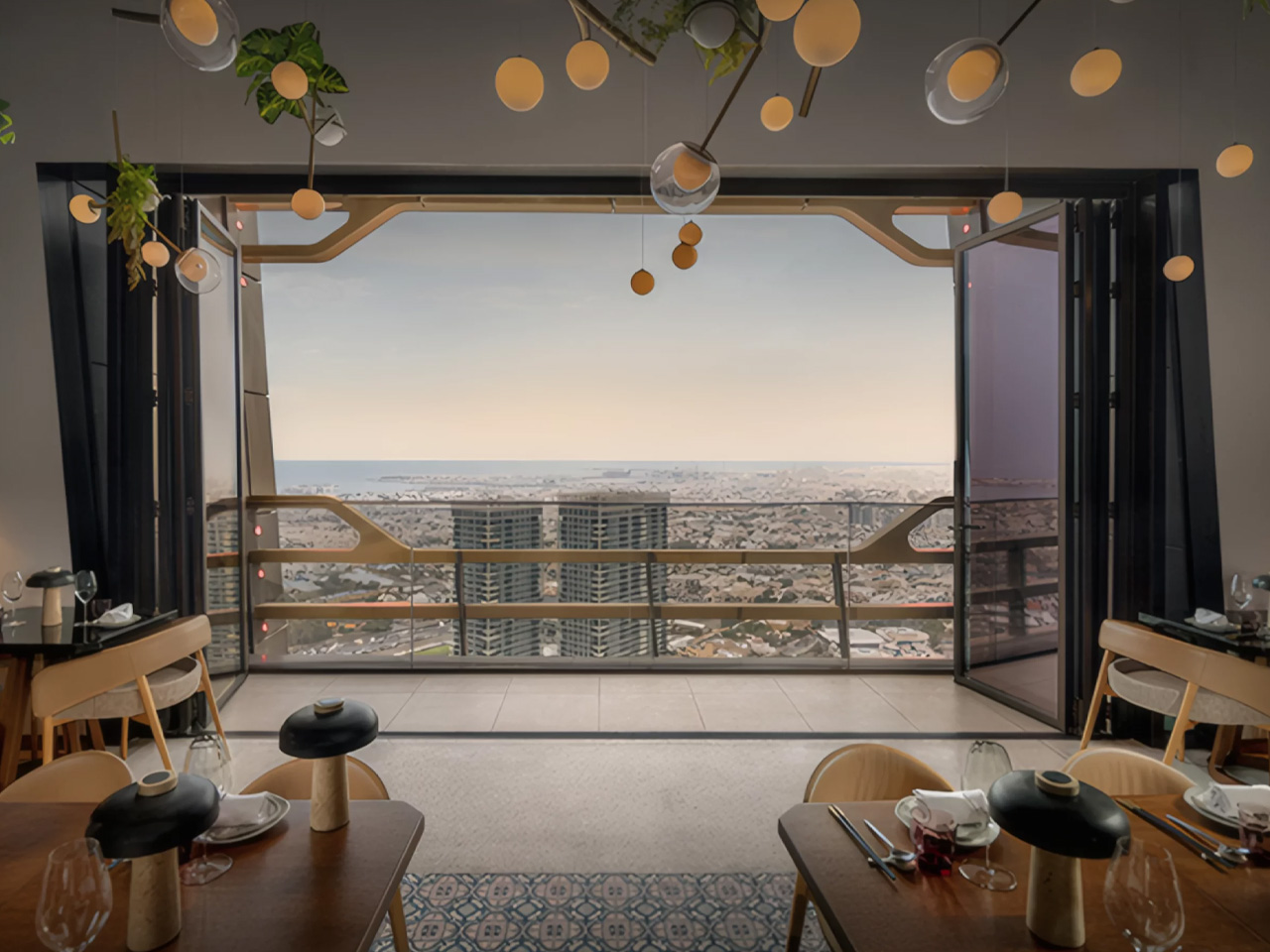
Positioned directly opposite the Burj Khalifa along Dubai’s main north-south artery, the Wasl Tower occupies a site that was previously untouched by high-rise development. A new pedestrian bridge now connects it to the Burj Khalifa metro station, threading the tower into the city’s movement infrastructure and making it a genuine civic node rather than an isolated object. Its programming reflects that ambition — the building houses residential apartments, offices, a hotel, restaurants, and entertainment spaces, with public programming deliberately elevated high above street level.
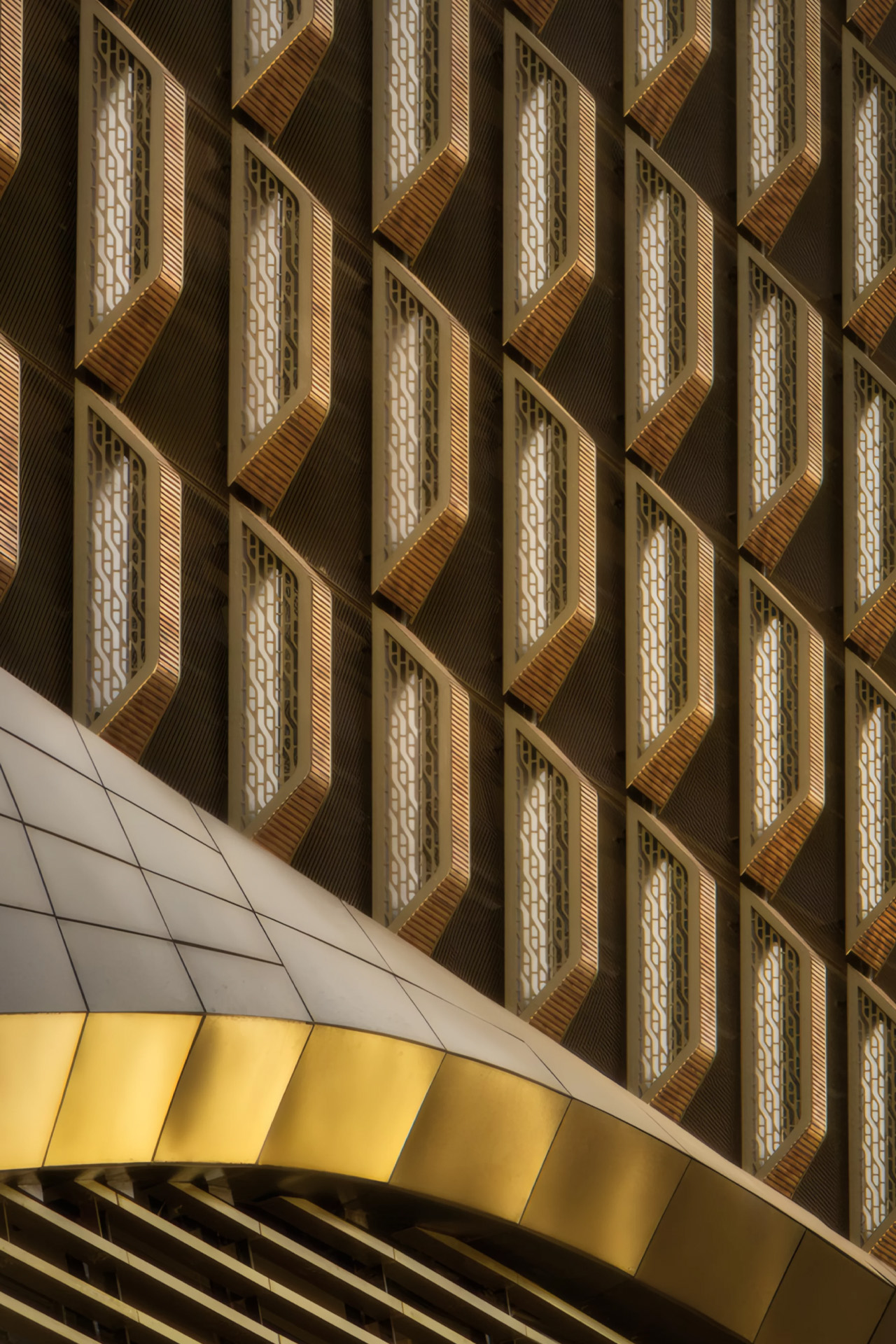
What gives the tower its visual texture is its facade, one of the tallest ceramic facades in the world. UNStudio and Werner Sobek clad the building in a lace-like grid of glazed clay fins, a material choice that is as low-tech as it is clever. The ceramic tiles diffuse and reflect the desert sun, reducing heat gain and eliminating the need for more energy-intensive shading systems. At night, the facade takes on an entirely different quality, illuminated in a way that makes the building appear to breathe.
For a city that has never been shy about spectacle, the Wasl Tower earns its place on the skyline by being something rarer: a building with a rigorous idea behind it. It references art history, responds to climate, and reshapes a stretch of one of the world’s most iconic roads, all at once.
The post UNStudio’s Wasl Tower Is Dubai’s Most Sculptural Skyscraper Yet first appeared on Yanko Design.