
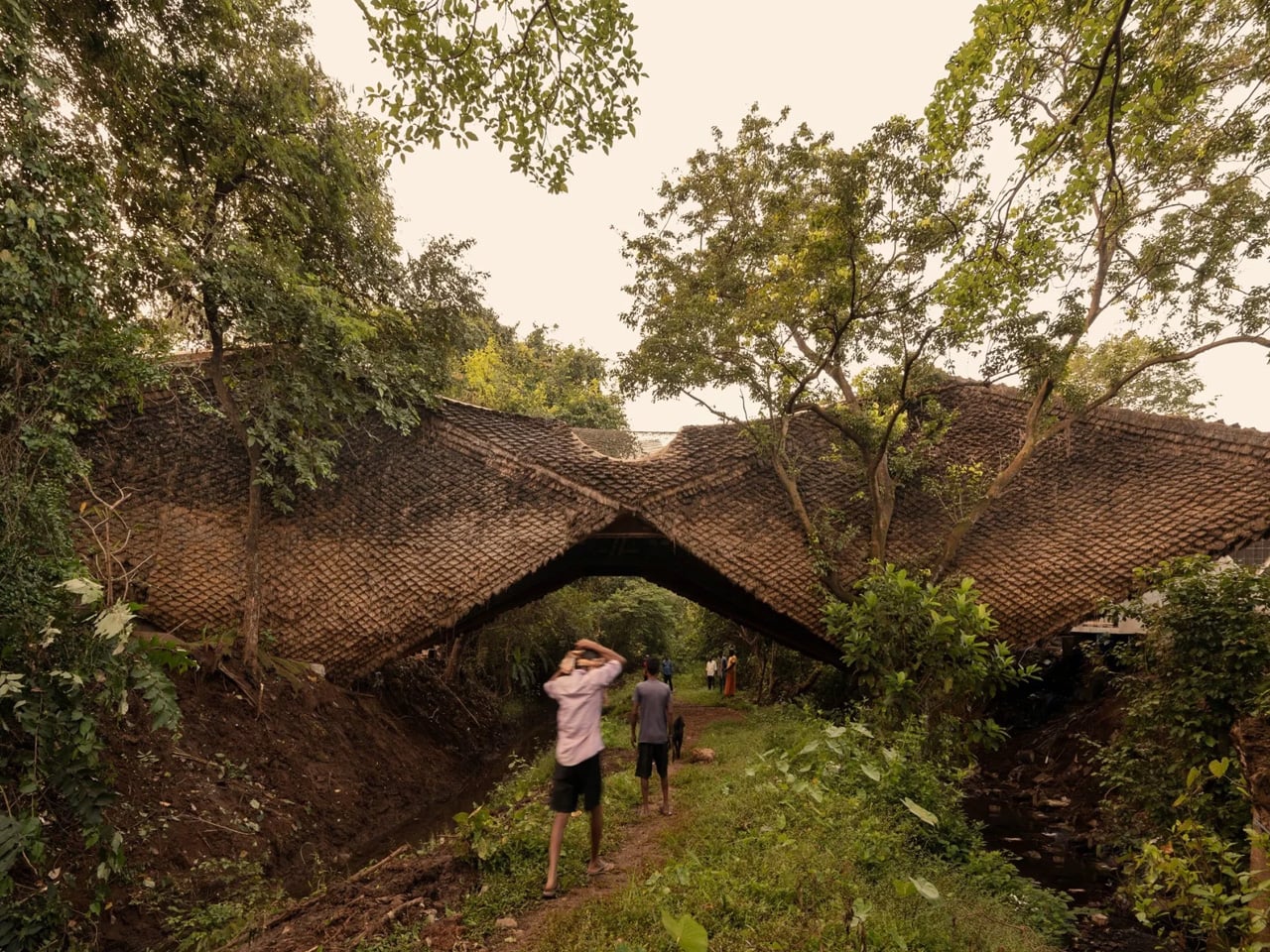
Most architects would see a seven-metre-deep gorge cutting through a site and call it a problem. Vinu Daniel and his studio, Wallmakers, looked at it and saw the house. The Bridge House in Karjat, Maharashtra, is exactly what its name promises — a weekend home that spans a 30-metre-wide spillway, with enough clearance below for diggers to pass through. Completed in 2025, the 4,500-square-foot structure sits across two parcels of land separated by two streams, and it does so with a quiet, almost organic confidence.
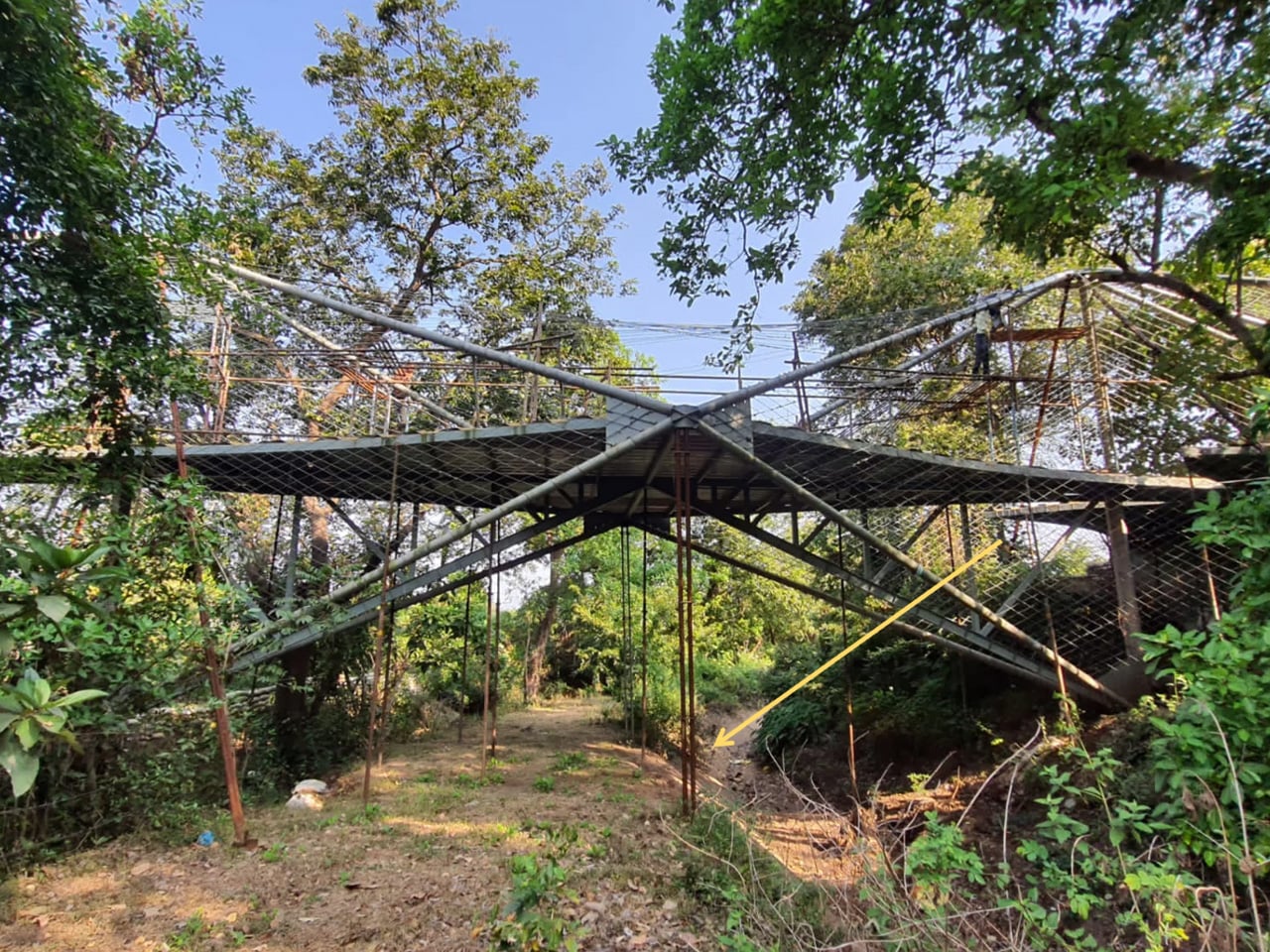
The structural logic is deceptively simple. Four hyperbolic parabolas form the spine of the suspension bridge, held together by minimal steel pipe and tendons working in tension. Over that skeleton, a grid of steel cables was laid out in a twisting hyperbolic paraboloid surface, then coated in a layer of mud — the same material Wallmakers has long treated as a primary architectural medium. The mud isn’t decorative. It provides the compressive strength that stabilises the entire bridge and acts as a barrier against the pests that typically undermine thatched construction.
Designer: Wallmakers
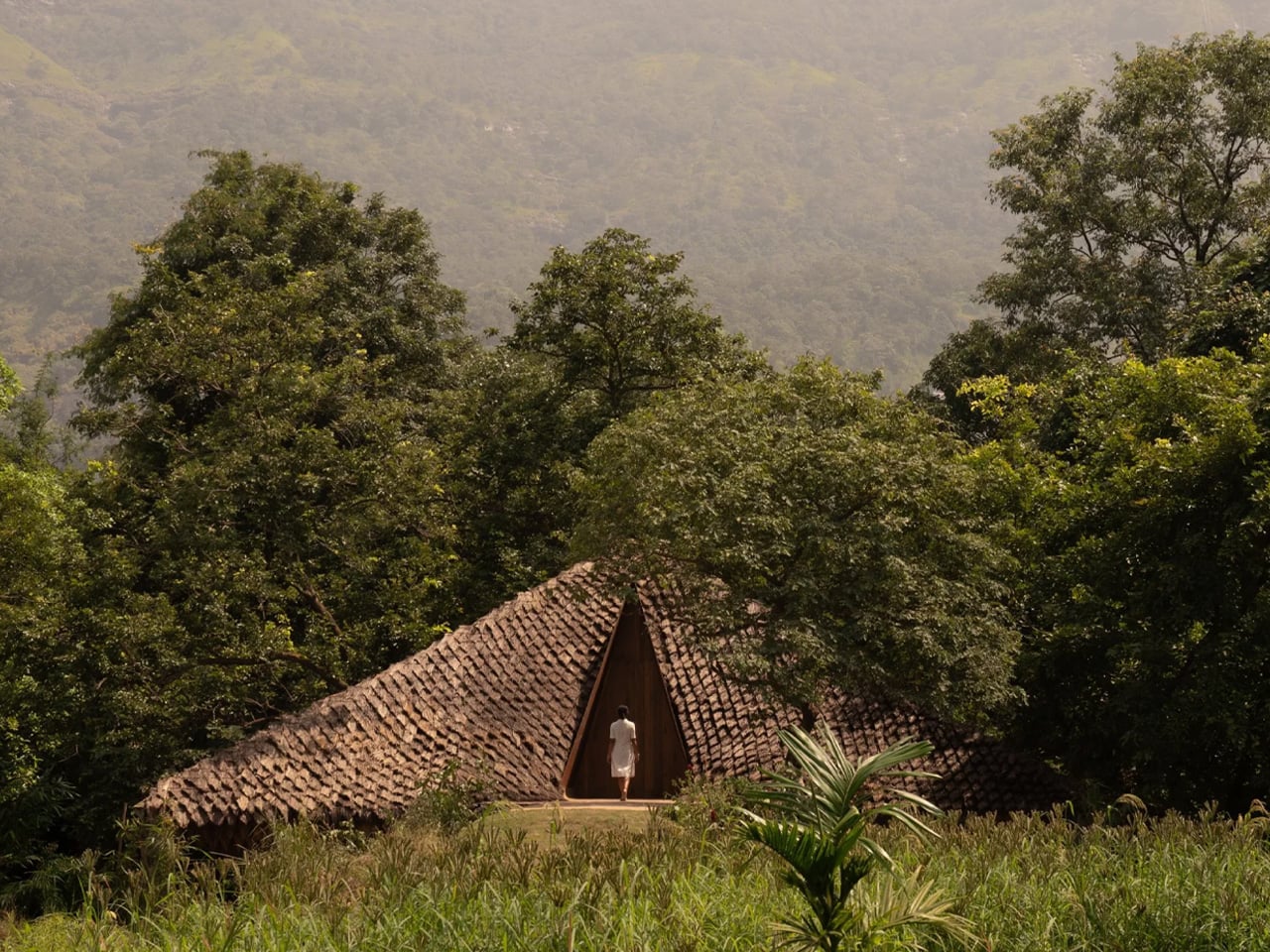
And then there’s the skin. The outer layer is local grass thatch, applied in overlapping scales that give the structure a texture closer to a living creature than a building. The resemblance to a pangolin is intentional. “Thatched roof construction, even though sustainable and thermally efficient, has been on the decline due to problems like pest invasion, lack of skilled labour, deforestation, and the hassle of constant reapplication,” Daniel noted. The mud-thatch composite here attempts to address exactly those failures — rethinking the material from the inside out rather than simply reviving a tradition.
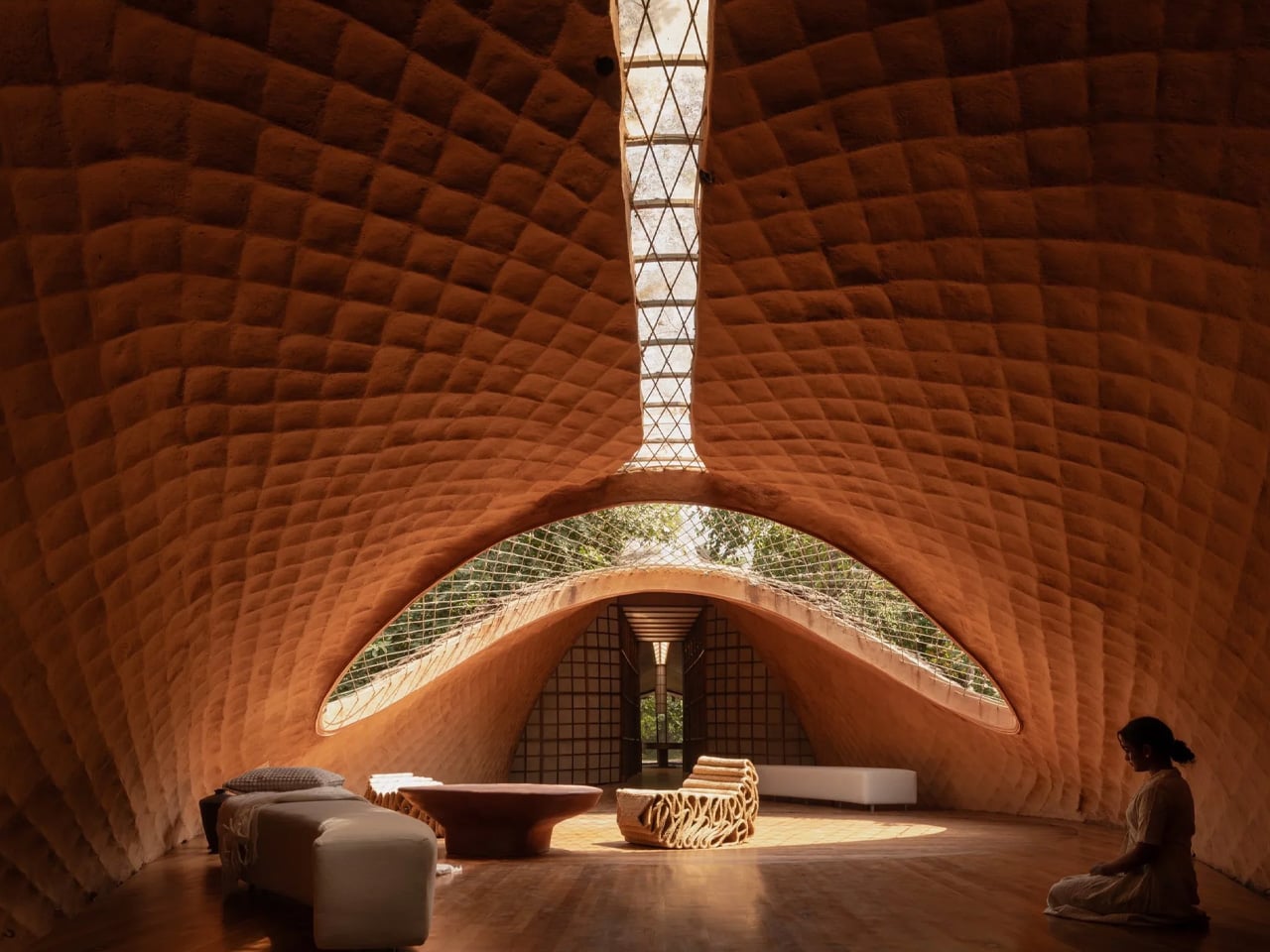
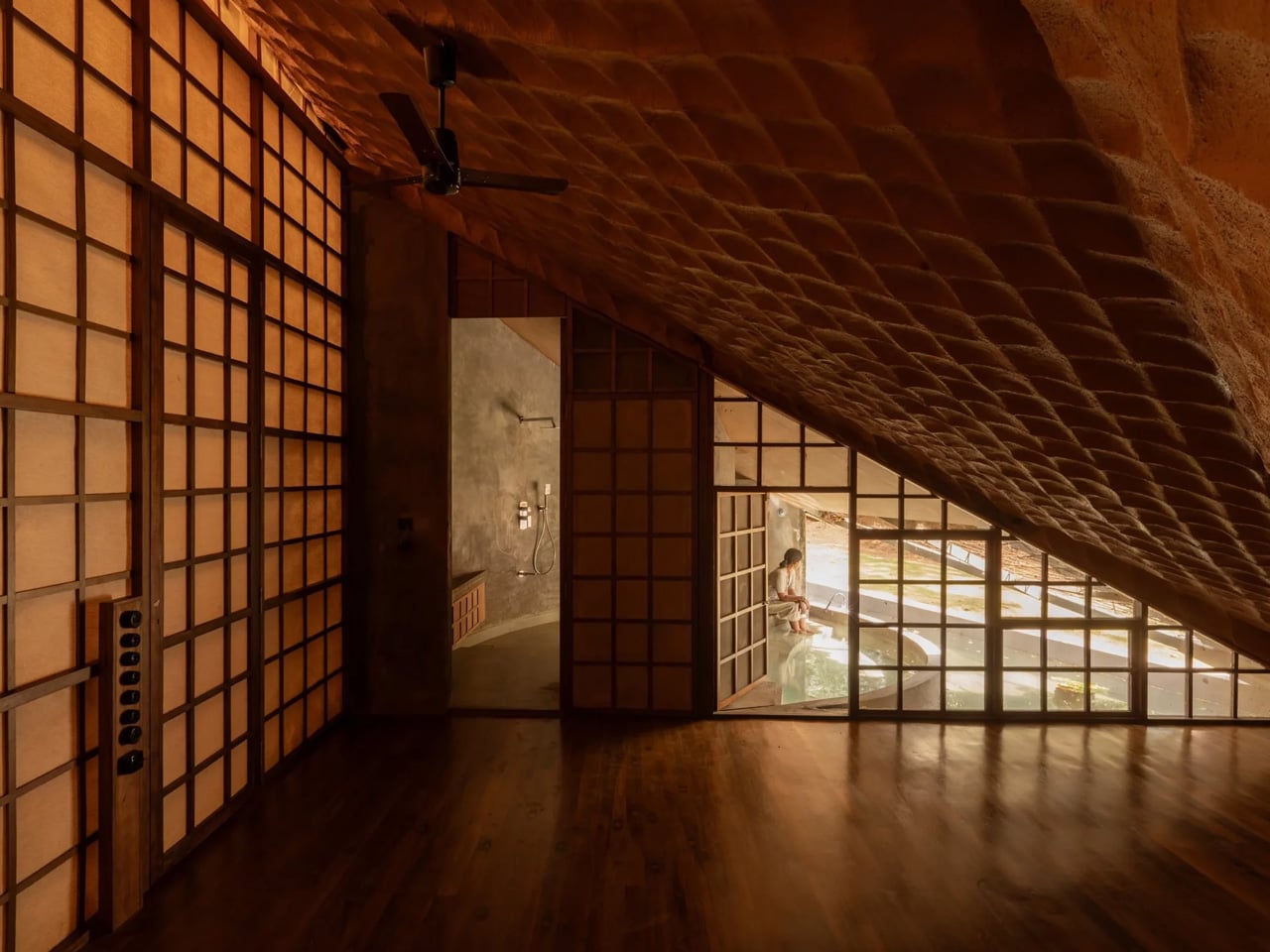
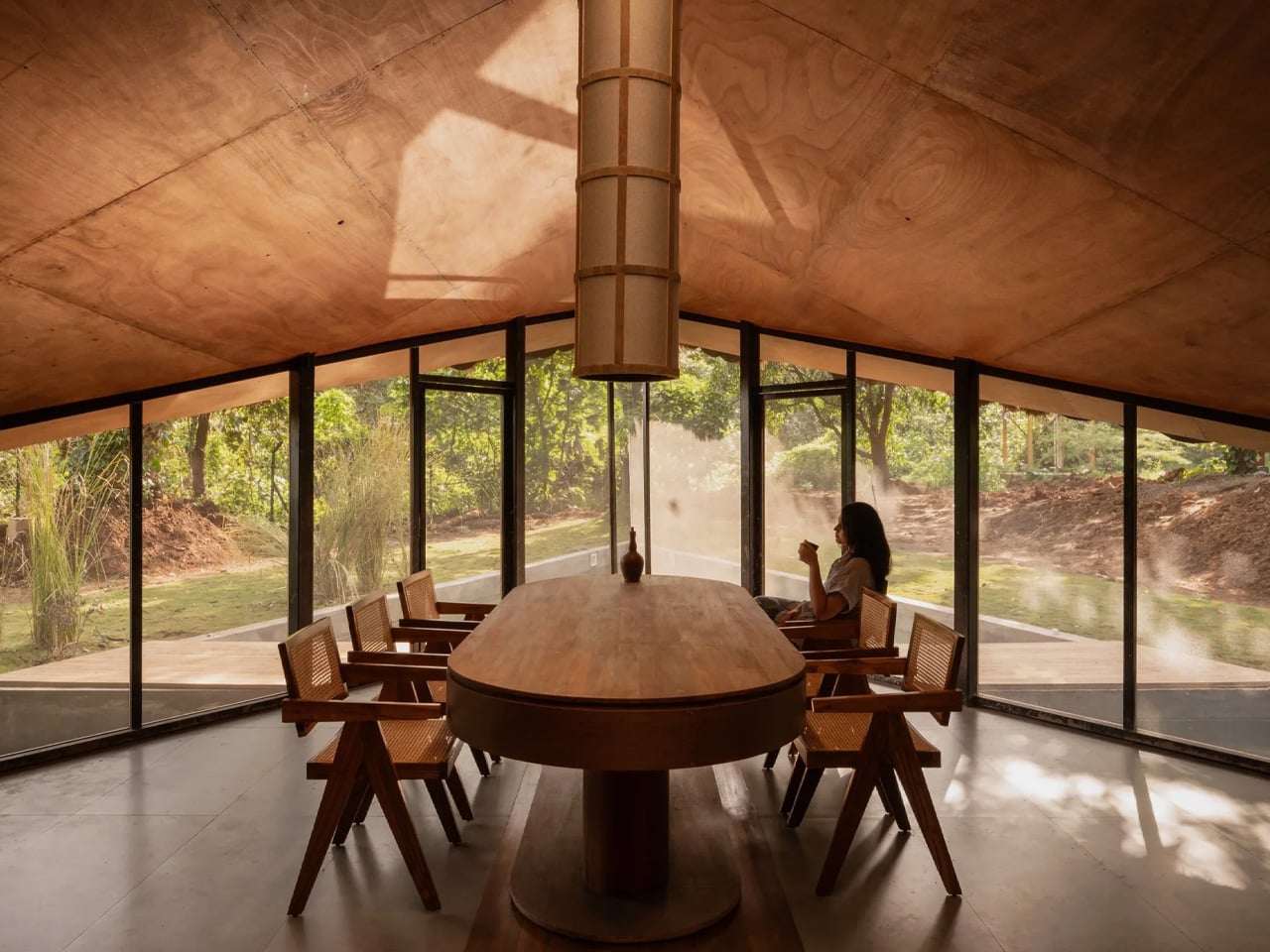
Getting materials to the site was its own challenge. The remote location in Karjat pushed the team toward using what was available locally, which ultimately shaped the entire material palette. The result is a building that feels pulled from the landscape rather than dropped into it. Translucent screens and raw mud surfaces define the interiors, keeping the atmosphere spare and tactile. The design team — Preksha Shah and Ramika Gupta — worked within tight constraints that only tightened the design thinking.
Bridge House is the kind of project that makes the site’s difficulties readable in the finished form. The gorge isn’t hidden; it’s the reason the house exists at all. That honesty — structural, material, spatial — is what makes Wallmakers’ work consistently worth paying attention to.
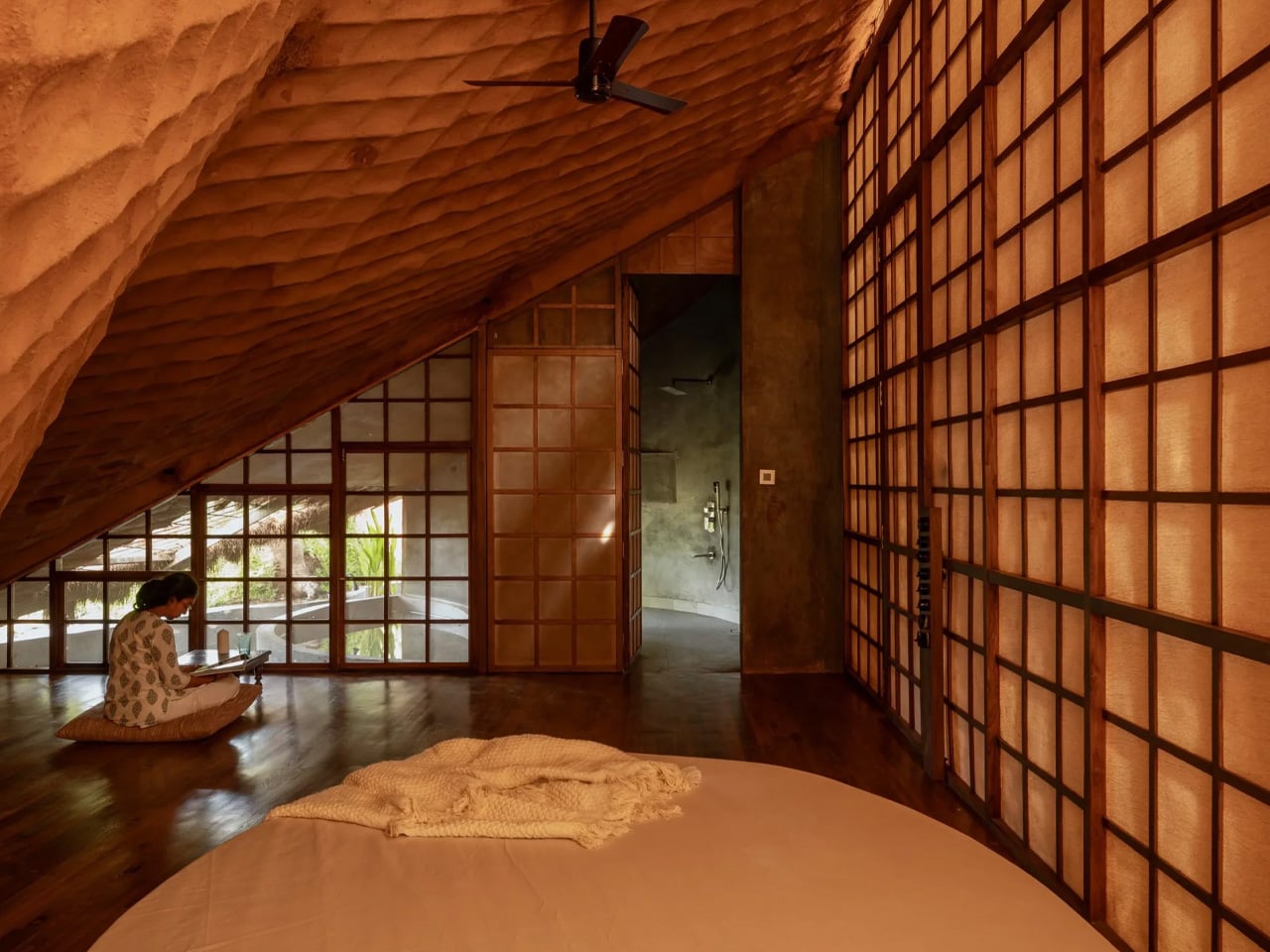
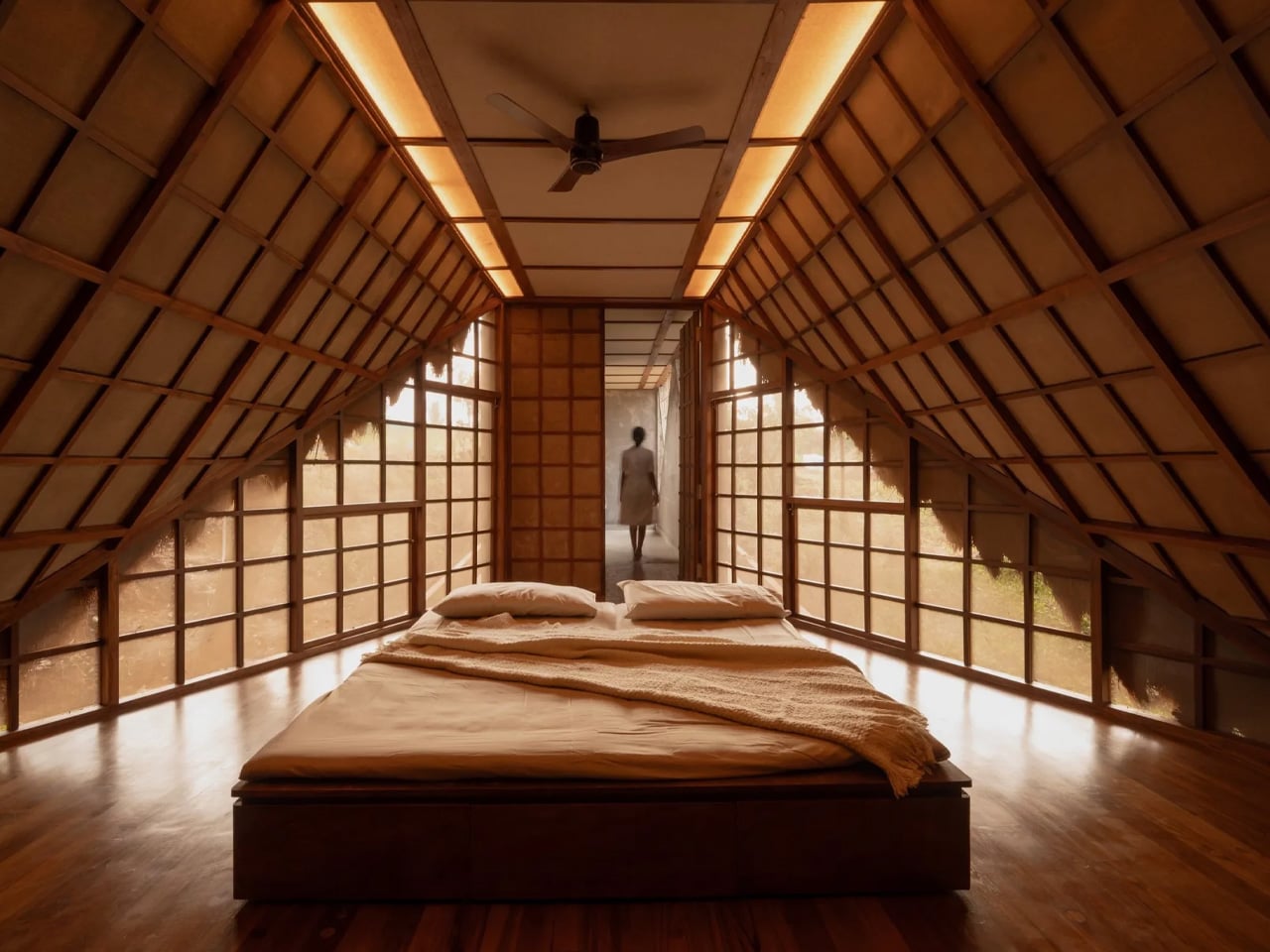
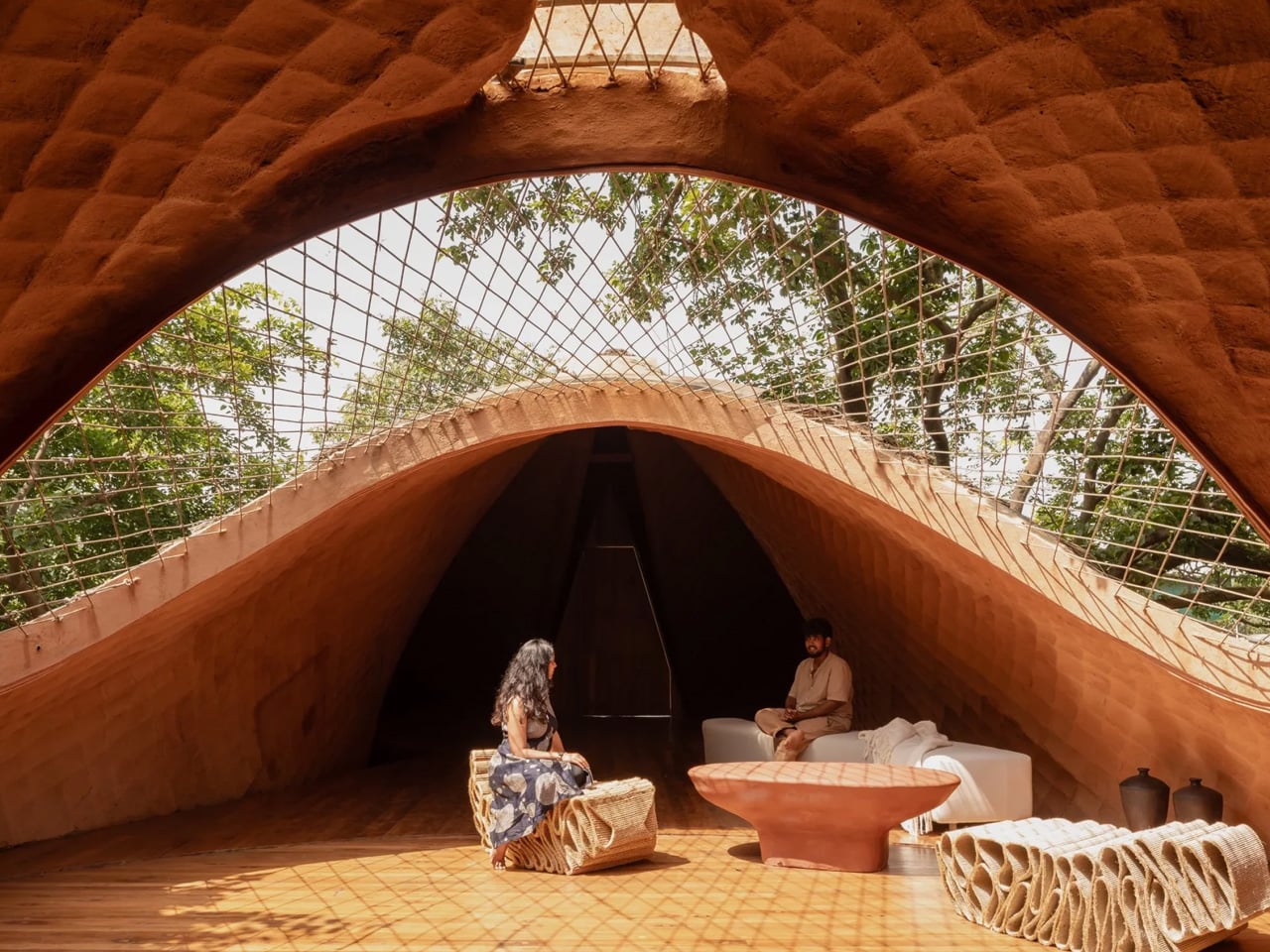
The post This House in Rural India Is Actually a Bridge — and It’s Covered in Scales first appeared on Yanko Design.