
Bees are in trouble, and we’ve known this for a while. Colony collapse disorder, habitat fragmentation, pesticide exposure, urban sprawl cutting off foraging routes. The list is long and the consequences, frankly, are dire. What we haven’t had until now is a design response that feels both beautifully pragmatic and genuinely hopeful. Nicolas Nielsen’s Hyve, a finalist at the 2026 Rimowa Design Prize, might just be that. And the way it looks is a big part of why it works.
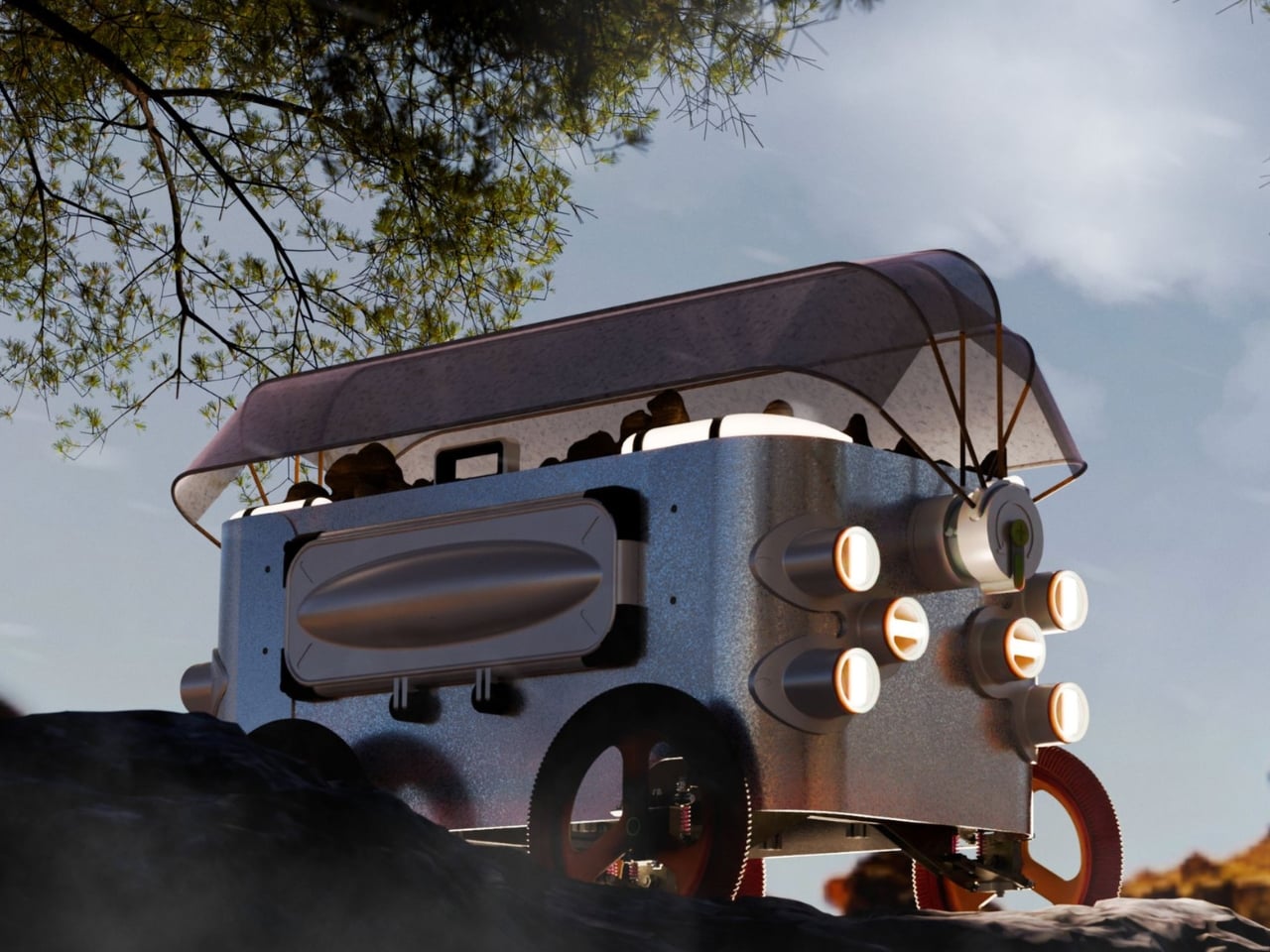
The form is immediately disarming. Hyve is a four-wheeled autonomous vehicle with a rounded, softly rectangular body finished in a matte granular silver, the kind of surface texture that reads as both industrial and tactile. It’s compact and low-slung, with a silhouette that sits somewhere between a utility rover and a vintage camper van. That reference isn’t accidental. The proportions are warm rather than clinical, and the overall object has a personality that most eco-tech concepts deliberately avoid. It doesn’t look like it’s trying to save the world. It looks like it belongs in it.
Designer: Nicolas Nielsen
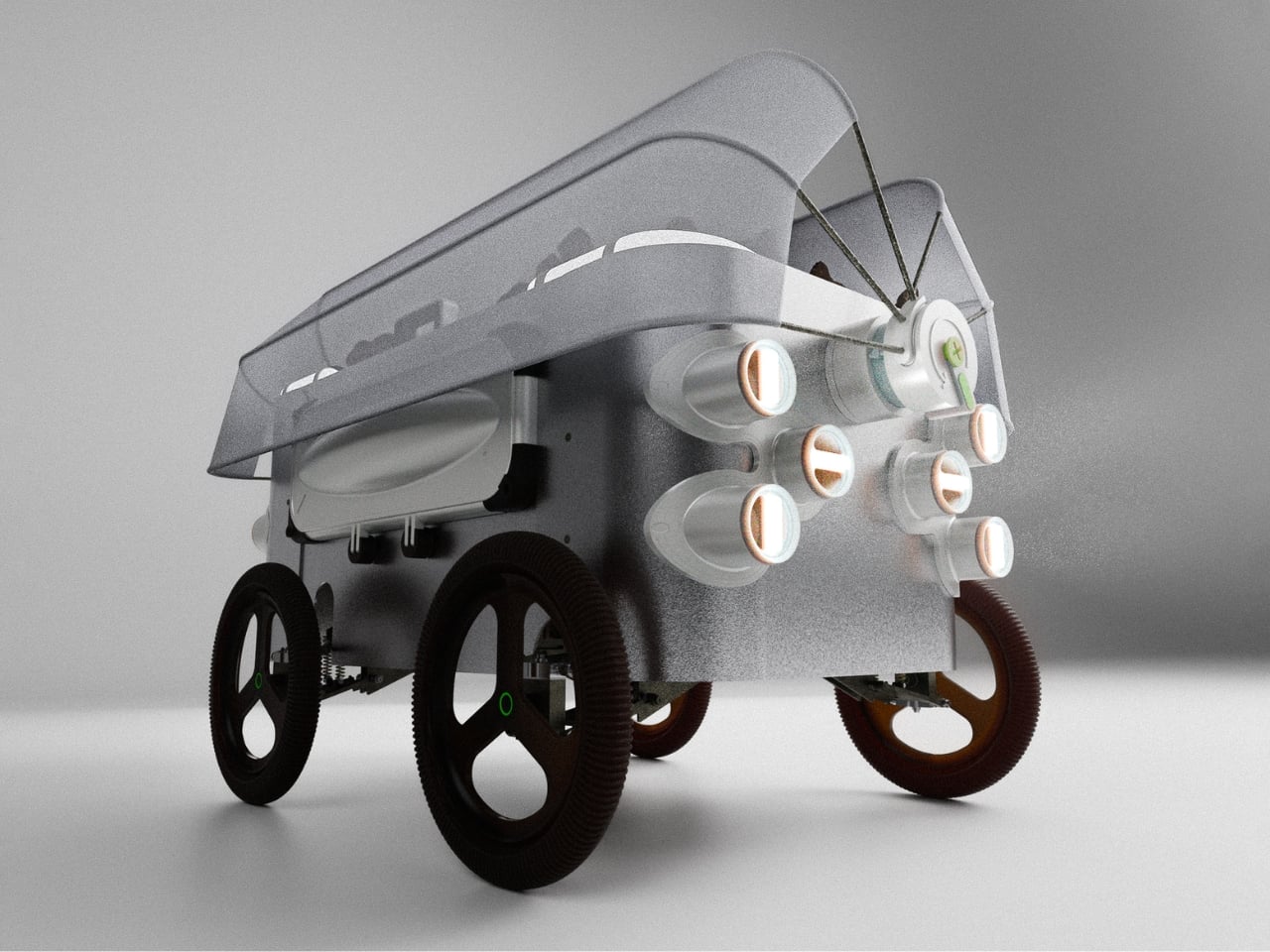
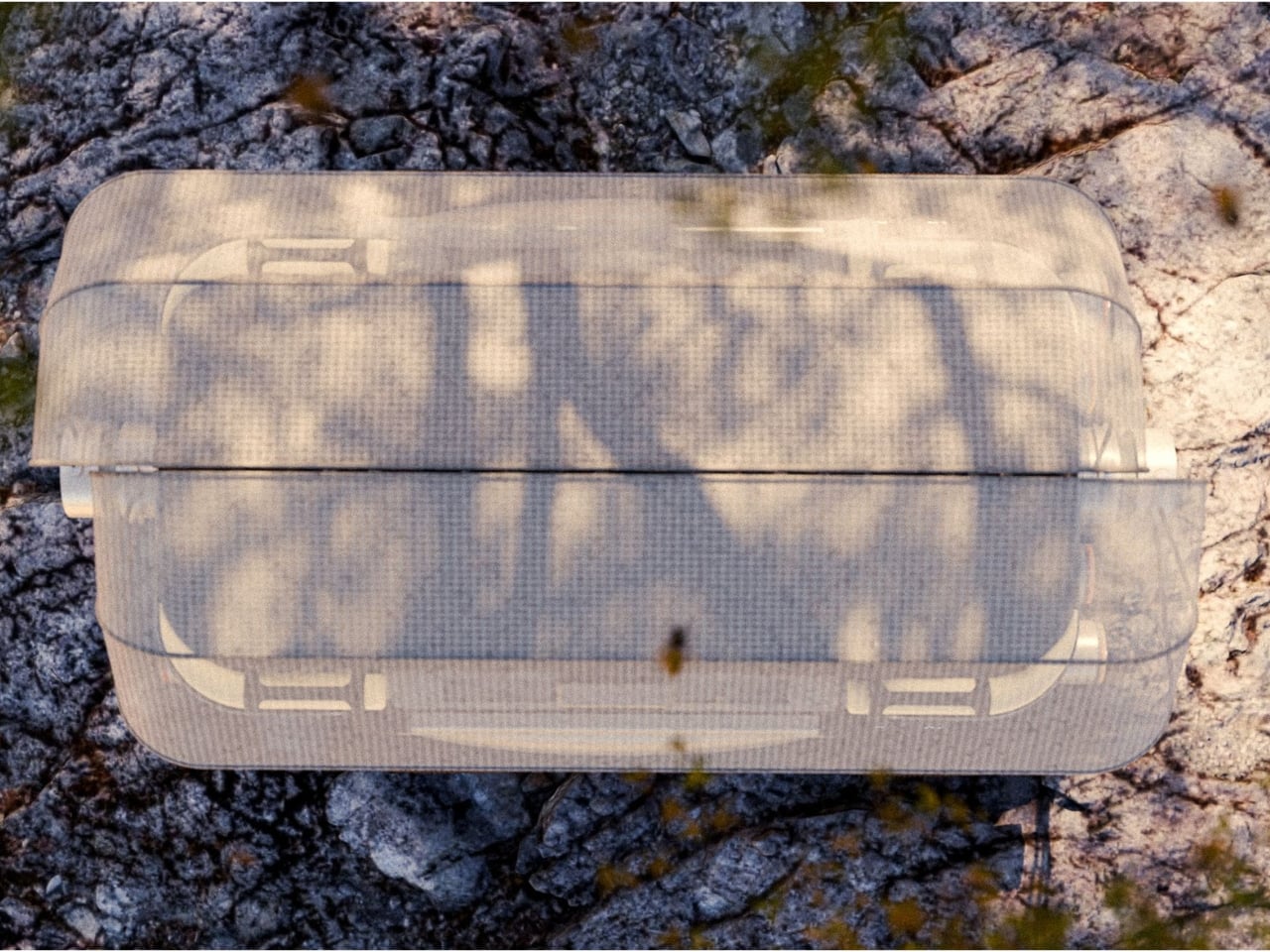
The canopy is one of the more quietly intelligent details. A translucent mesh shell arches over the top of the body, held in place by thin wire-like supports that read almost like antennae. From above, it’s gauzy and semi-transparent, allowing you to sense the living colony beneath without fully exposing it. The mesh serves a real function: ventilation, protection, light diffusion. But it also gives Hyve an organic quality that the rest of the machine-finished body doesn’t have. The tension between those two registers, the engineered and the biological, runs through the entire design.
On one face of the body, a cluster of circular bee entry ports is arranged in a near-grid pattern. Each one is recessed slightly into the body and emits a warm amber glow from inside, as if the colony itself is producing light. It’s a small detail that does a lot of work. It signals life. It communicates that something living is operating from within this machine, which is exactly the conceptual point Nielsen is making. The opposite face carries a single large oval recess, more utilitarian, balanced against the ports’ almost decorative quality.
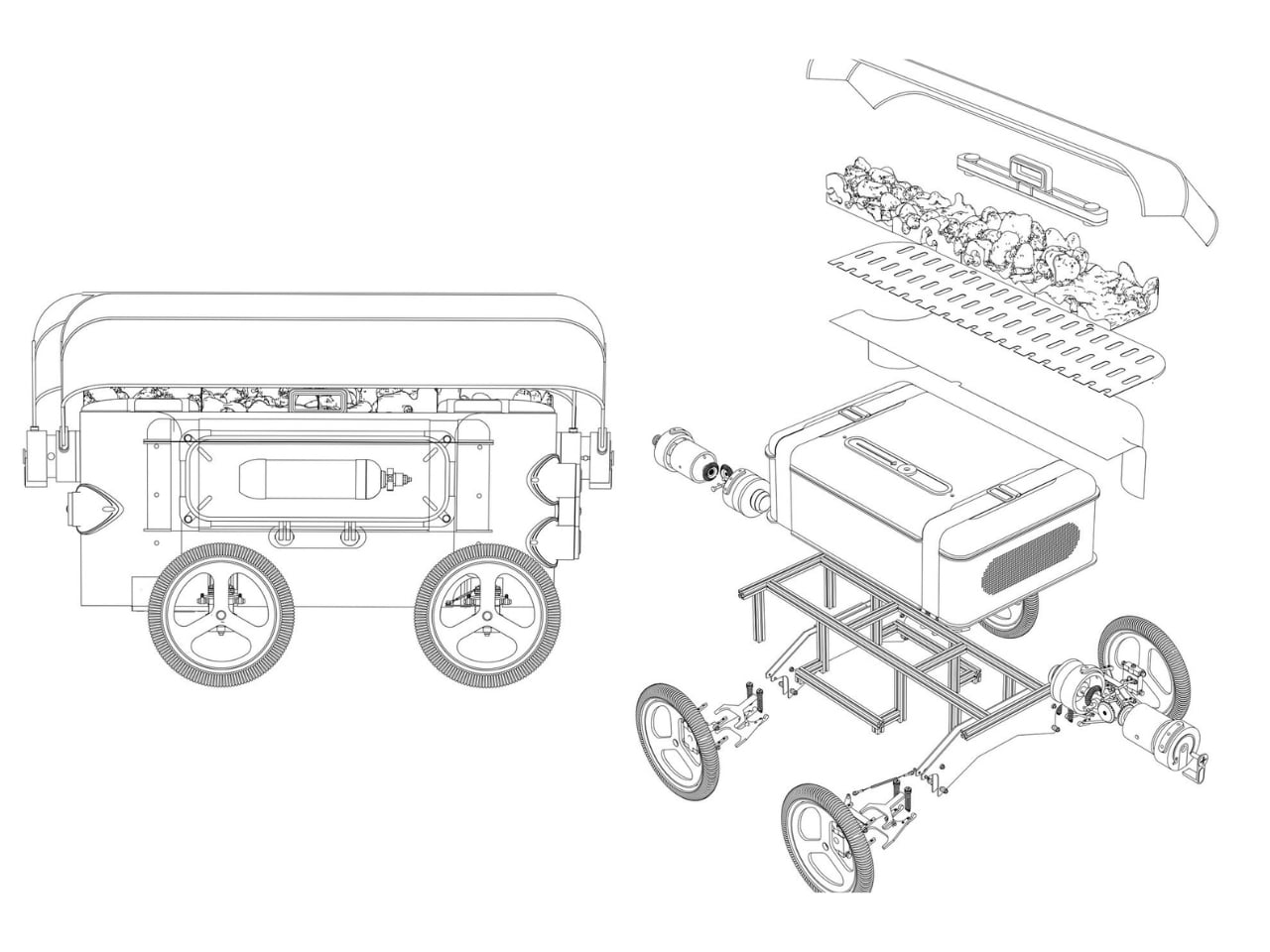
The exploded drawings tell the fuller story. The interior is layered: a living habitat tray sits within the body, holding the actual comb and colony, with a perforated ventilation layer separating it from the mechanical systems below. A hydrogen fuel cell unit, boxy and neatly vented, sits at the rear of the chassis. Below everything, a tubular steel frame supports the four independently driven wheels, each one milled with spoke detailing and fitted with wide-tread tires that have a suggestion of orange at the hub. The assembly reads like a small, purposeful machine. Every component has a clear role, and nothing looks over-engineered.
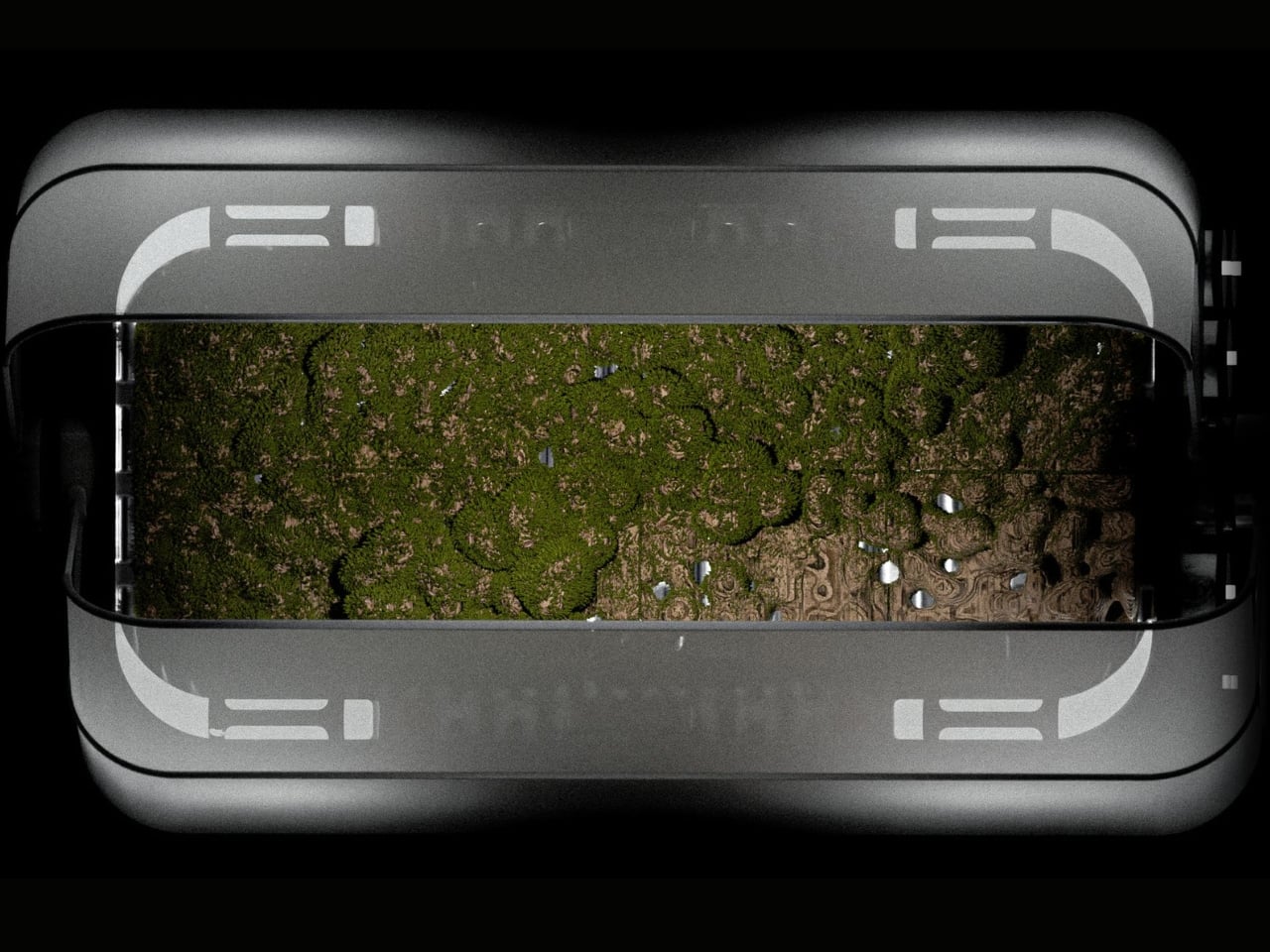
The interior view is the one that stops you. Looking directly down through the canopy into the colony chamber, you see a dense, organic landscape of moss, comb and natural building material. It’s wild and textured and completely alive, framed by the precision geometry of the machine around it. Nielsen made no attempt to tidy it up or render it neutral. The contrast between the manicured exterior and the raw interior feels intentional, like the design is making a quiet argument: that nature doesn’t need to be controlled to be held.
Seen outdoors, resting on rocky terrain with the ambient light catching the silver body and the amber ports glowing in the dusk, Hyve looks like it genuinely belongs in a landscape. Not as a foreign object dropped into nature, but as something designed to move through it with care. That’s a harder thing to pull off than it sounds. A lot of sustainability-focused design ends up looking apologetic, as though the object is embarrassed by its own existence. Hyve doesn’t have that problem. It’s confident, considered, and clearly built by someone who understood that how a thing looks is part of what it says. Nicolas Nielsen said something worth listening to.
The post A Student Just Designed a Self-Driving Beehive for Cities first appeared on Yanko Design.