
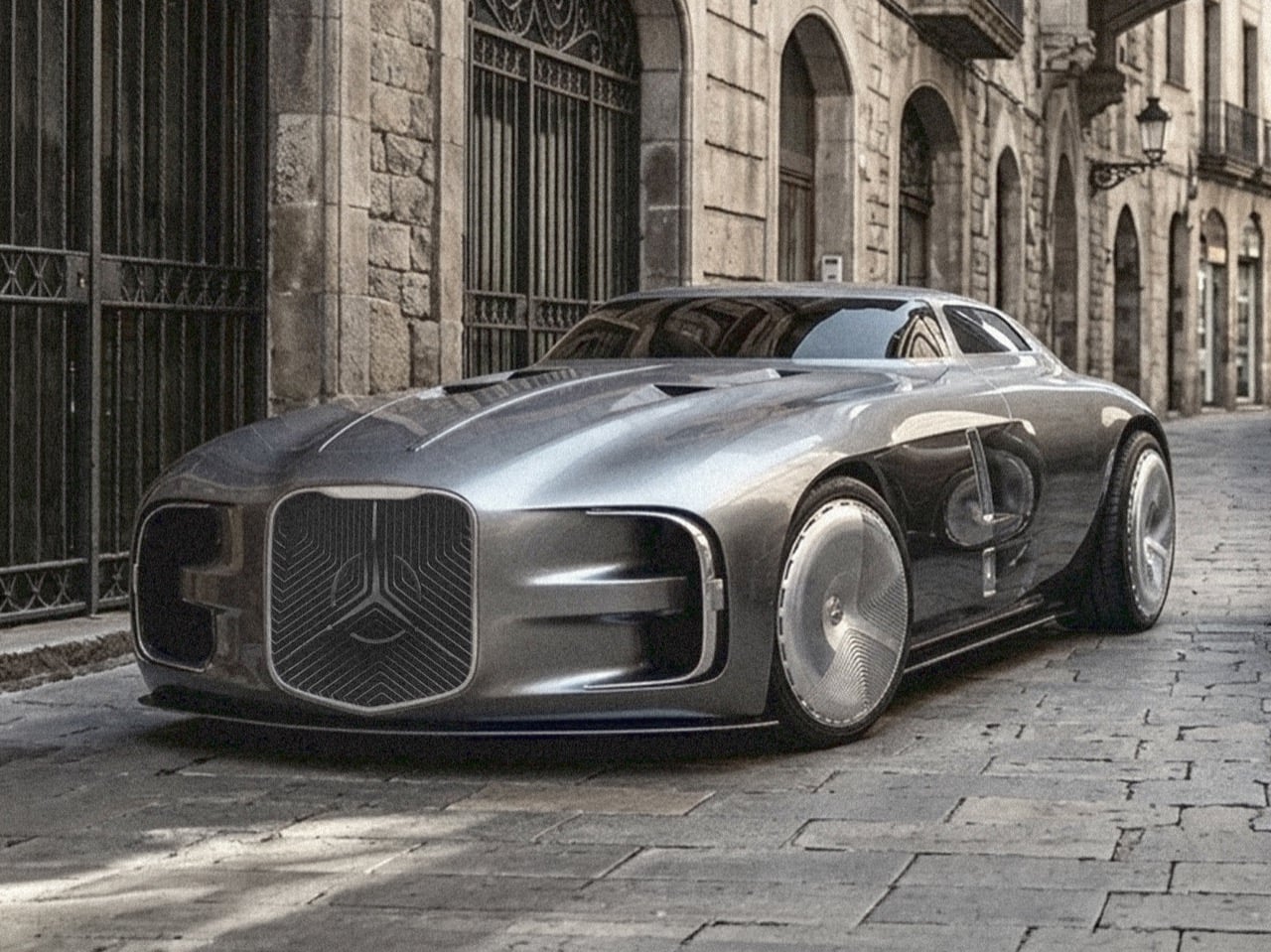
Design school thesis projects rarely get permission to be reckless. Most are built to please a panel of professors, sanded down until every surface looks defensible on a resume. Jaeun Park ignored that instinct entirely with his MA thesis project, a Mercedes concept he calls Vision Timeless, framed around a simple tension he labels modernity over heritage. Rather than softening Mercedes’ most aggressive vintage design cues, Park amplified them until the result looks more predator than luxury sedan. The question driving the whole project seems to be how far you can push a heritage grille before it stops referencing the past and starts threatening the present.
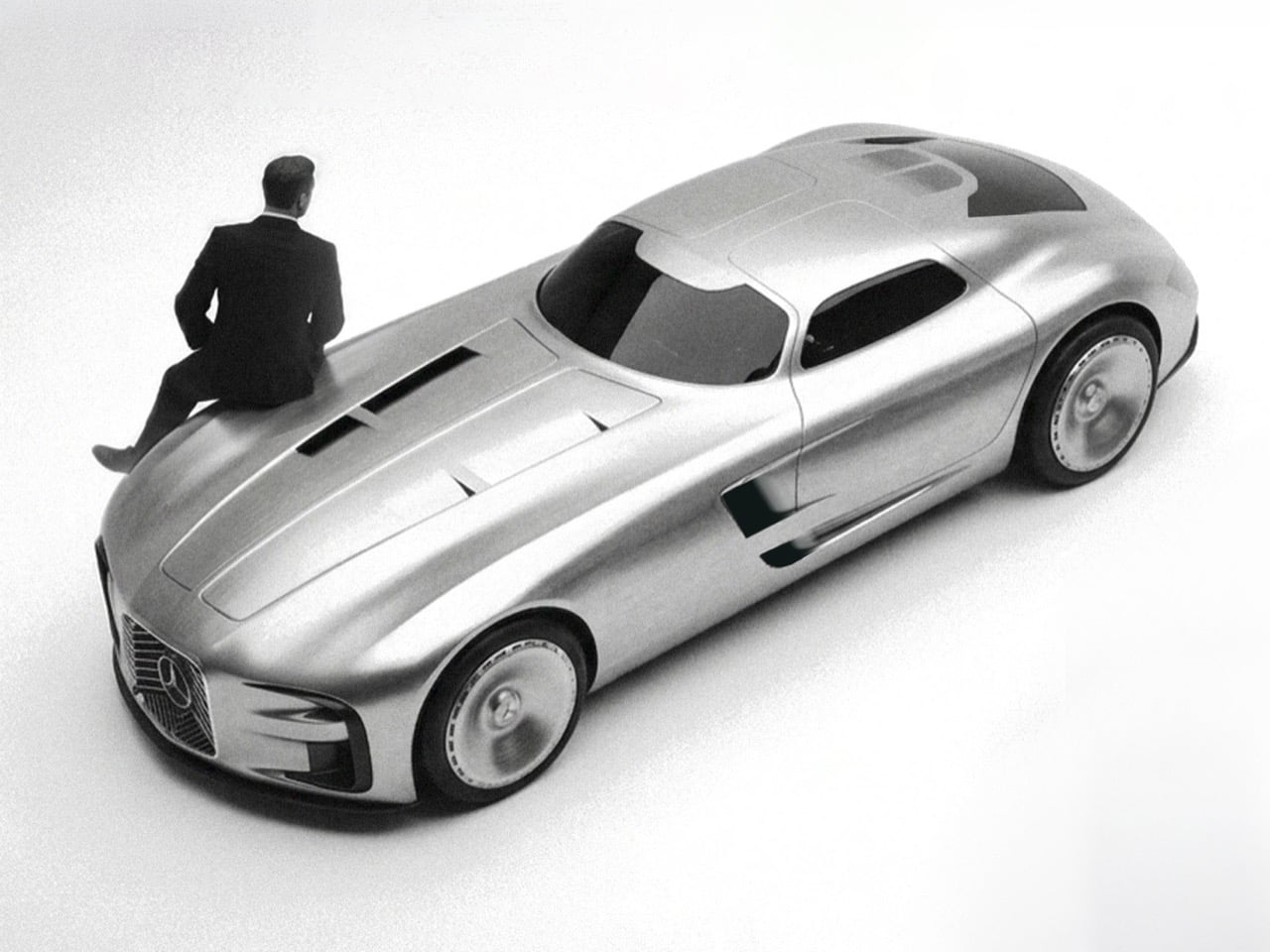
Built entirely in Blender by Park himself, the concept reimagines the brand’s vertical slat grilles from the 300 SL and W100 Pullman as one continuous trapezoidal mesh that consumes the three pointed star into its own structure. The proportions lean long and low, with a stretched hood, a teardrop fastback roofline, and gullwing doors that nod directly to Mercedes’ most iconic body style. Around back, the badge reappears as fractured triangular taillights rendered in red, a graphic flourish that turns a regulatory necessity into a design statement. Park rendered the body in multiple finishes, cycling between mirror chrome, gunmetal black, and an iridescent maroon that shifts hue under different lighting setups. Inside, a crystal shift knob and brushed metal trim suggest he was thinking about jewelry as much as ergonomics. This is heritage design with the brakes cut.
Designer: Jaeun Park
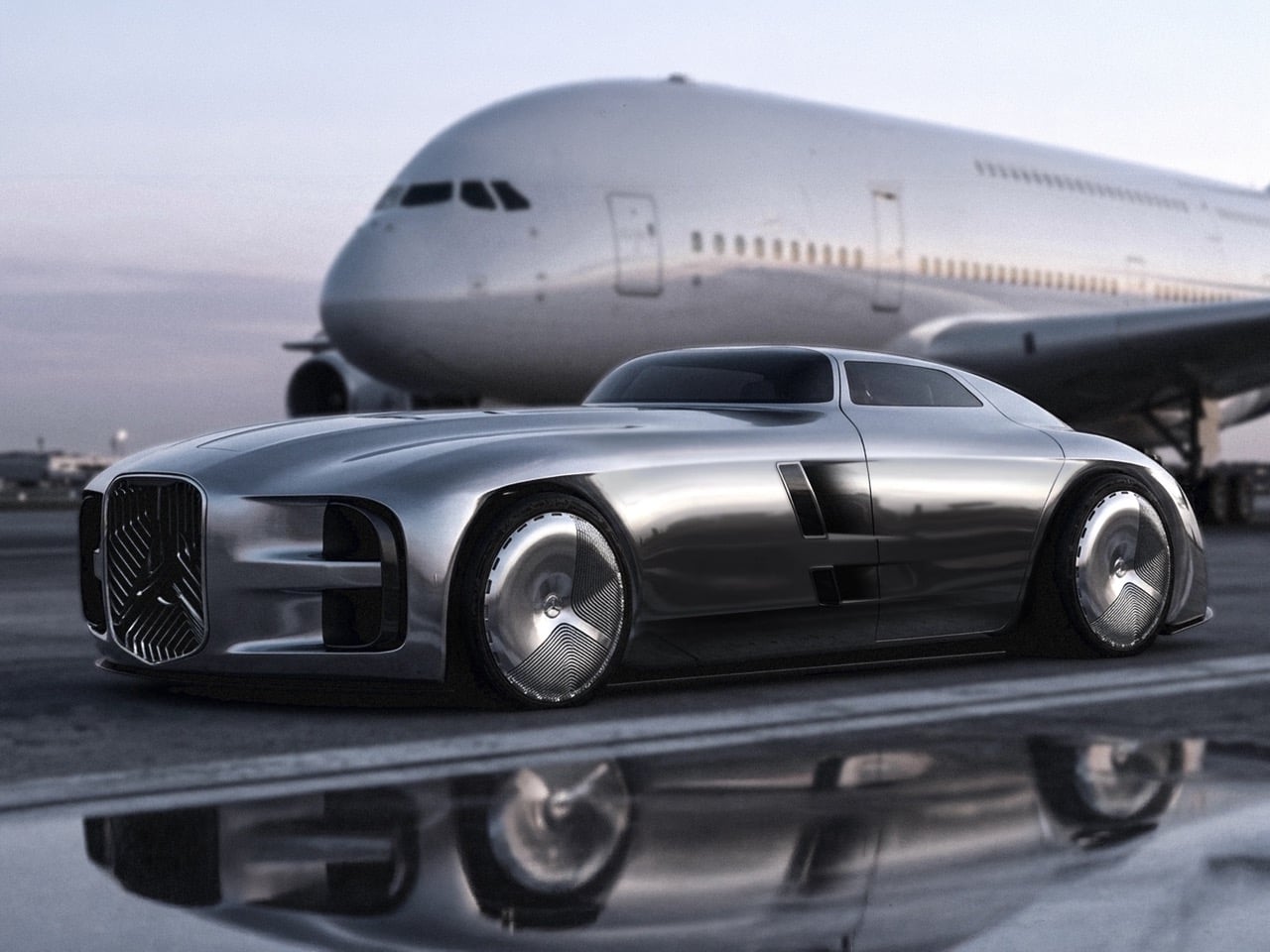
Park stacked dozens of vertical slats into a single trapezoidal block that narrows slightly at the base, a shape lifted from the W100 600 Pullman’s upright nose and stretched until it covers most of the front fascia. Thin LED strips run along either side instead of sitting in separate housings, so the face reads as one continuous slab rather than a stack of parts. The three pointed star gets folded into the lattice itself instead of sitting centered and isolated the way it does on every other Mercedes, visible only as a faint outline depending on the angle. The Pullman used this grille shape to signal formality and state car presence. Park uses the same vertical rhythm to signal something closer to a predator’s grille.
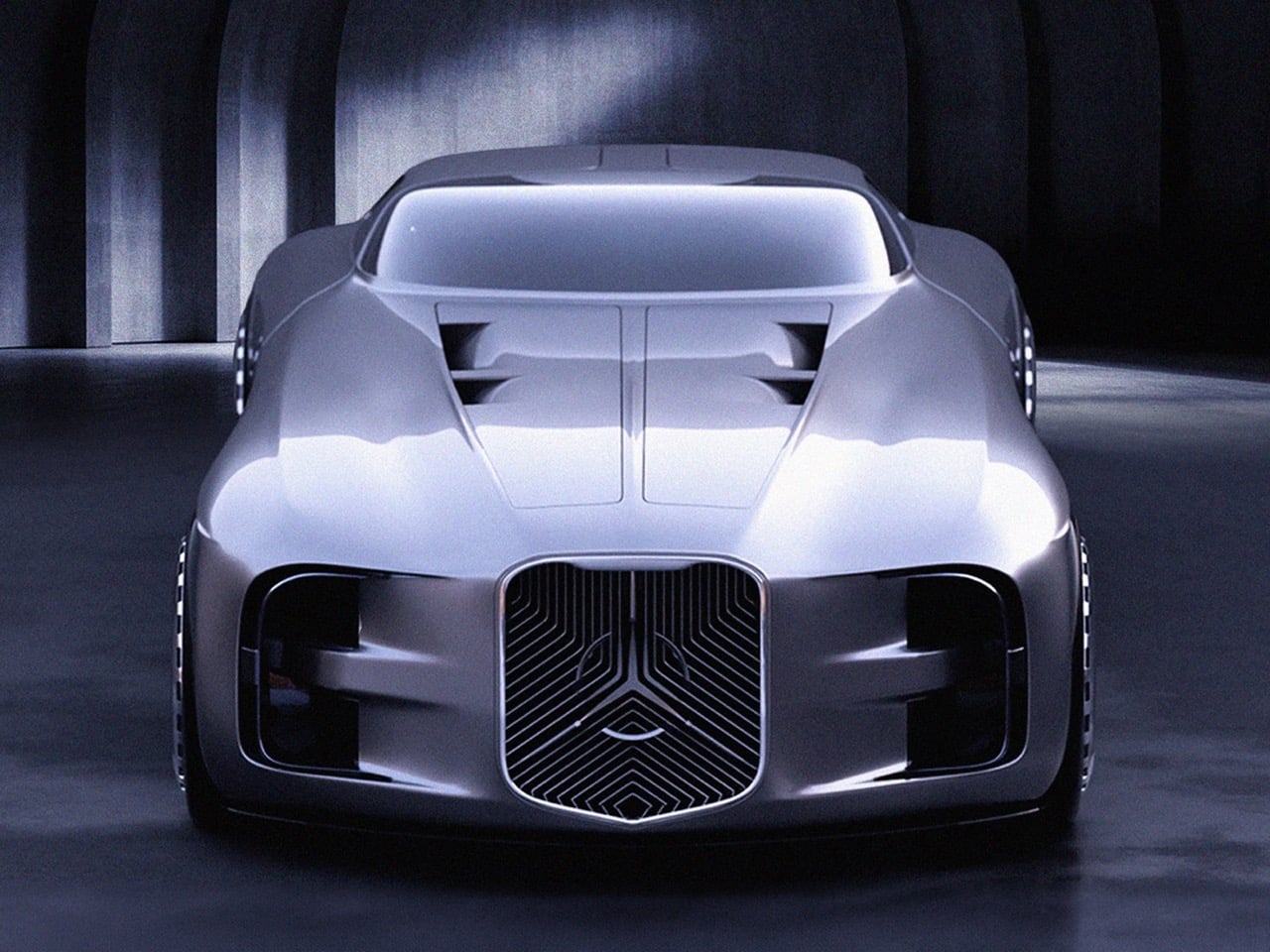
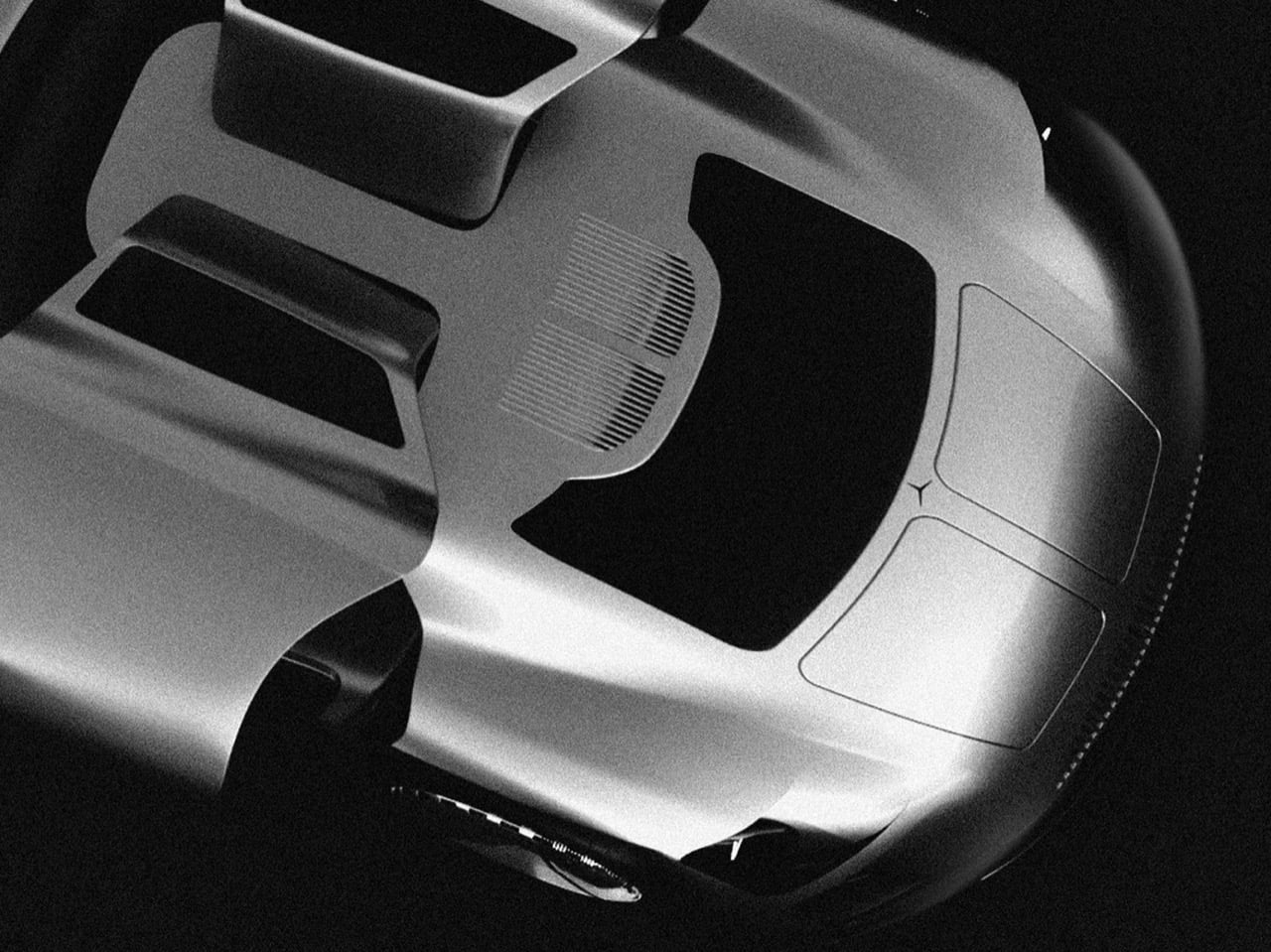
The hood runs long and flat in the classic front engine GT layout, while the cabin sits pushed back into a teardrop greenhouse that tapers almost to a point at the tail. Gullwing doors hinge upward the way they did on the original 300 SL, which tracks given how directly this project pulls from that car. The surfacing skips hard character lines almost entirely, relying on continuous curvature instead. Park rendered the body in several finishes: a polished silver, a near black gunmetal against raw concrete, and a maroon that shifts toward violet depending on the light. Each finish changes how the car reads, from industrial to something more expensive looking.
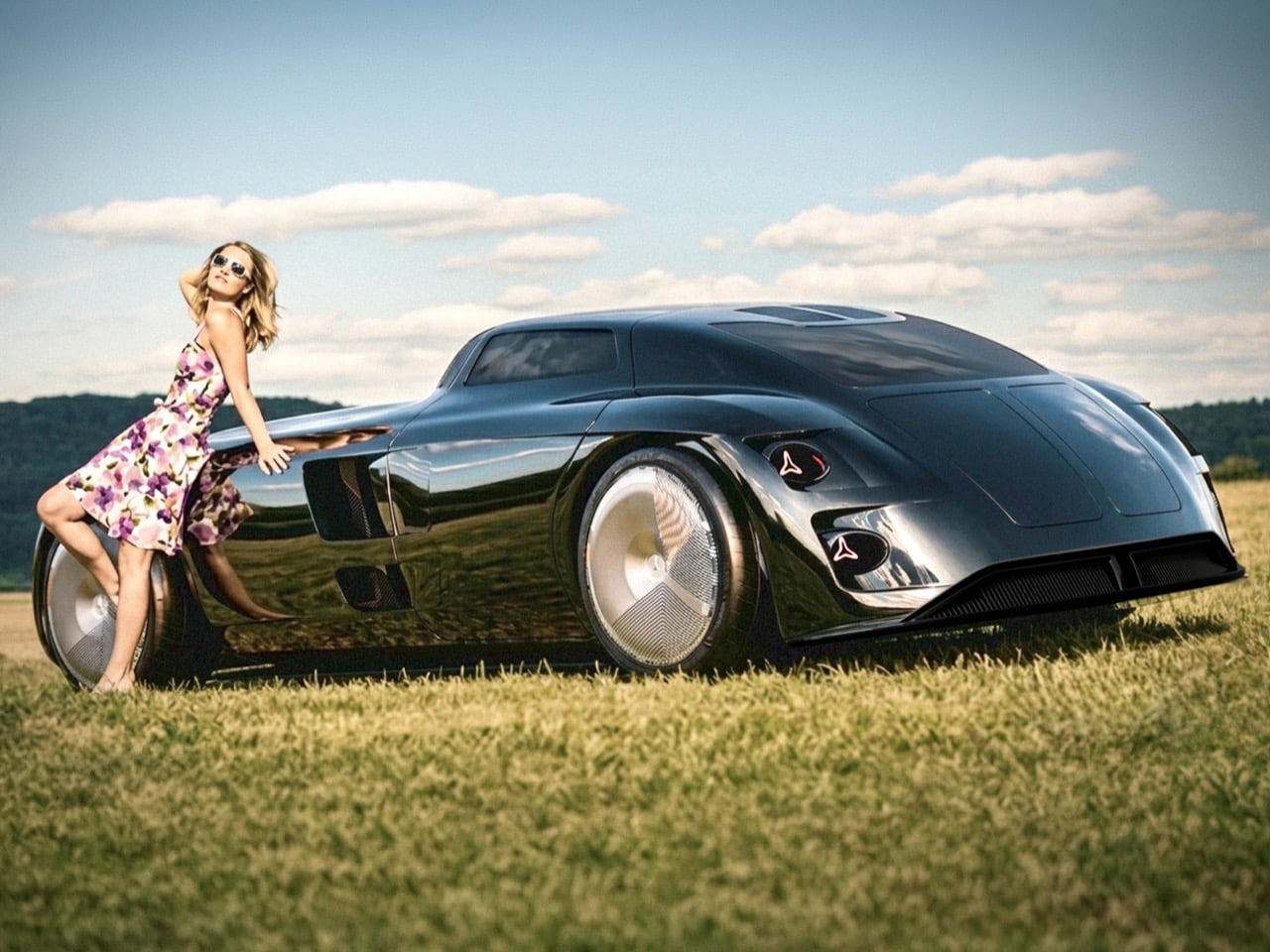
Park breaks the three pointed star apart at the rear instead of folding it into a single shape, splitting the badge into triangular red taillight clusters that look like shards. A Kamm style cutoff gives the tail a clean edge rather than letting the teardrop roofline trail off. The rear glass sits nearly flush with the body, with no spoiler or wing breaking up the surface, so the fractured taillight graphic stays the focal point. Most Mercedes badges sit centered and symmetrical at the back. This one looks like it got hit with a hammer, and that’s clearly the intent.

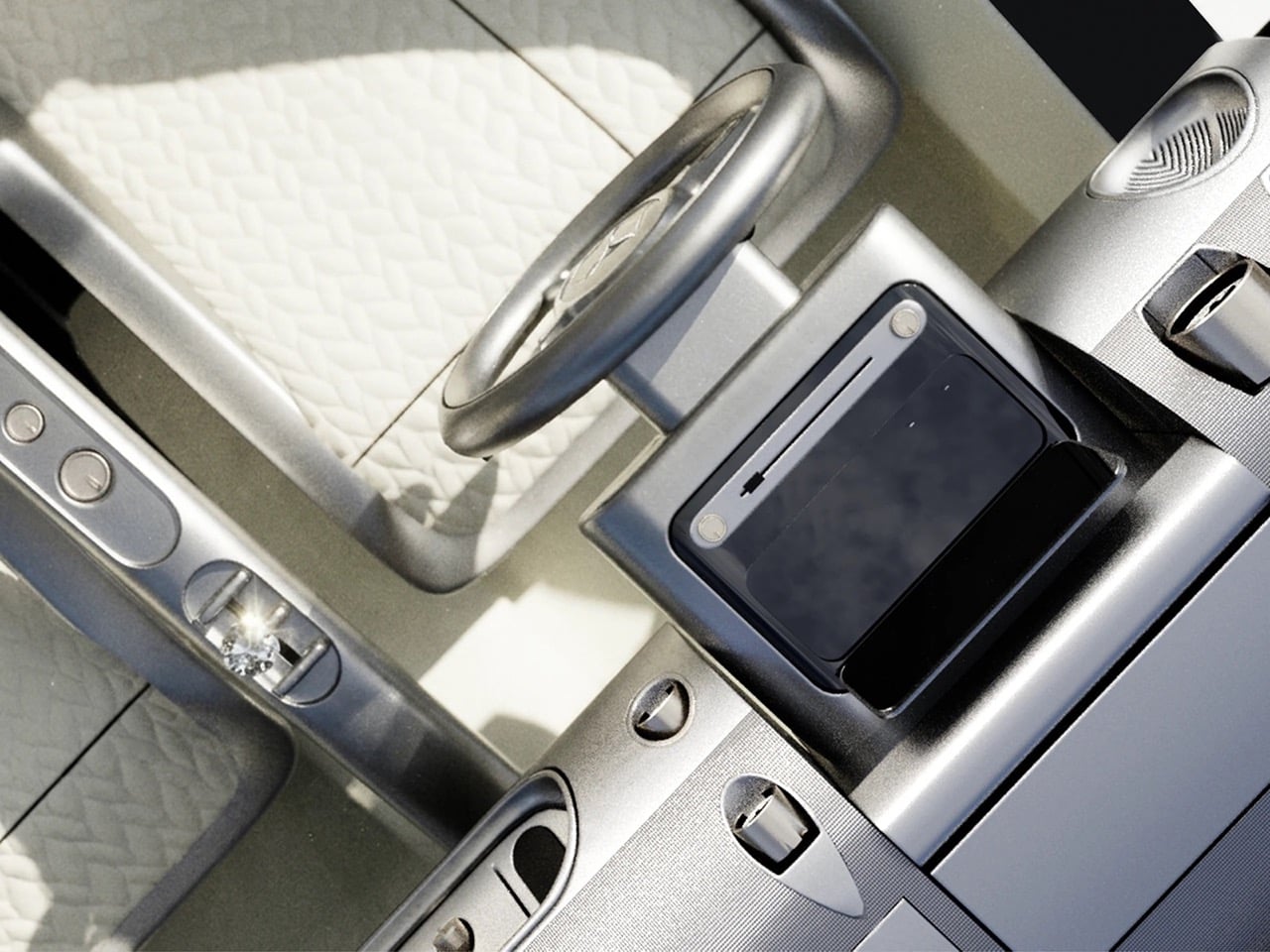
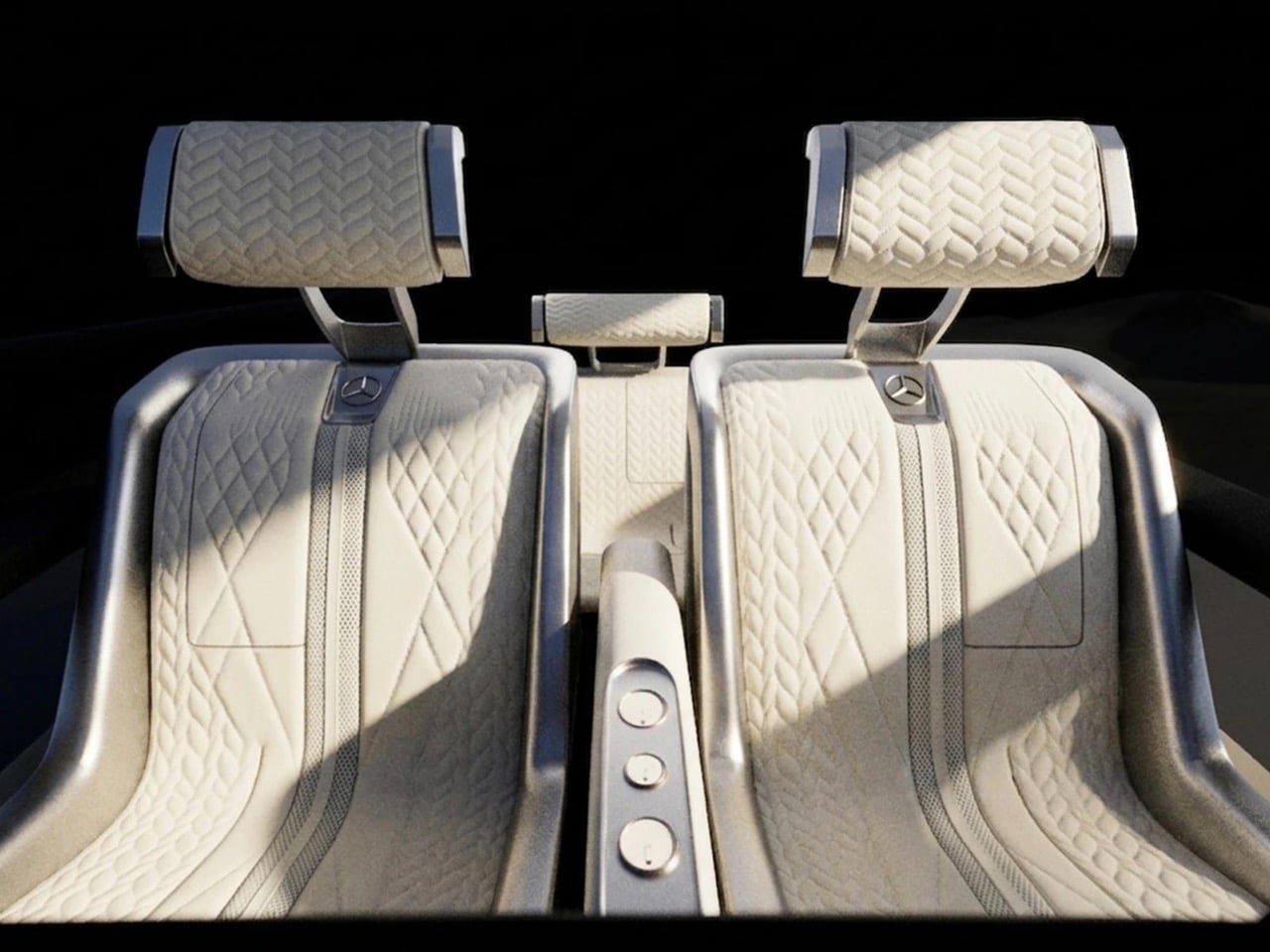
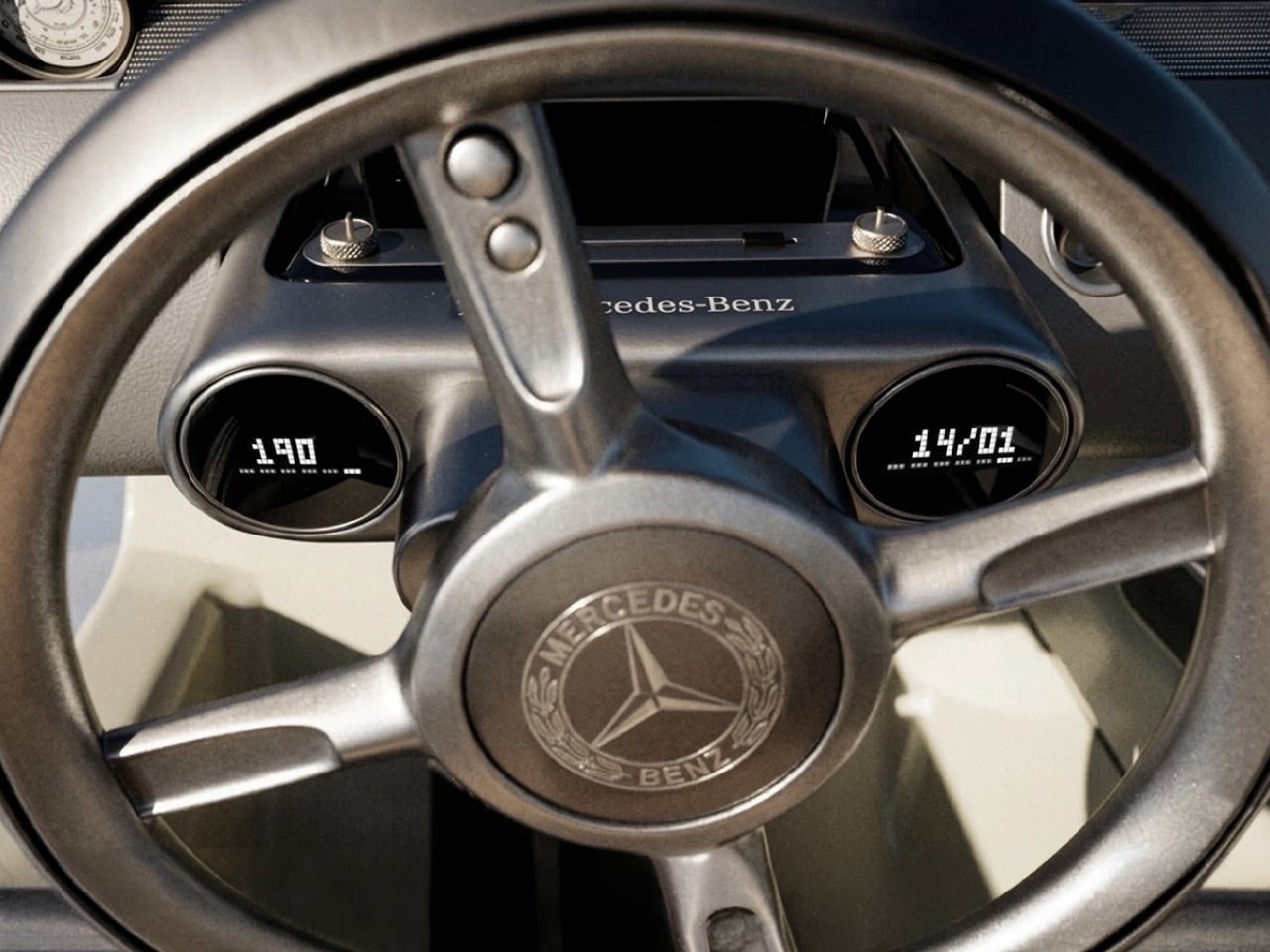
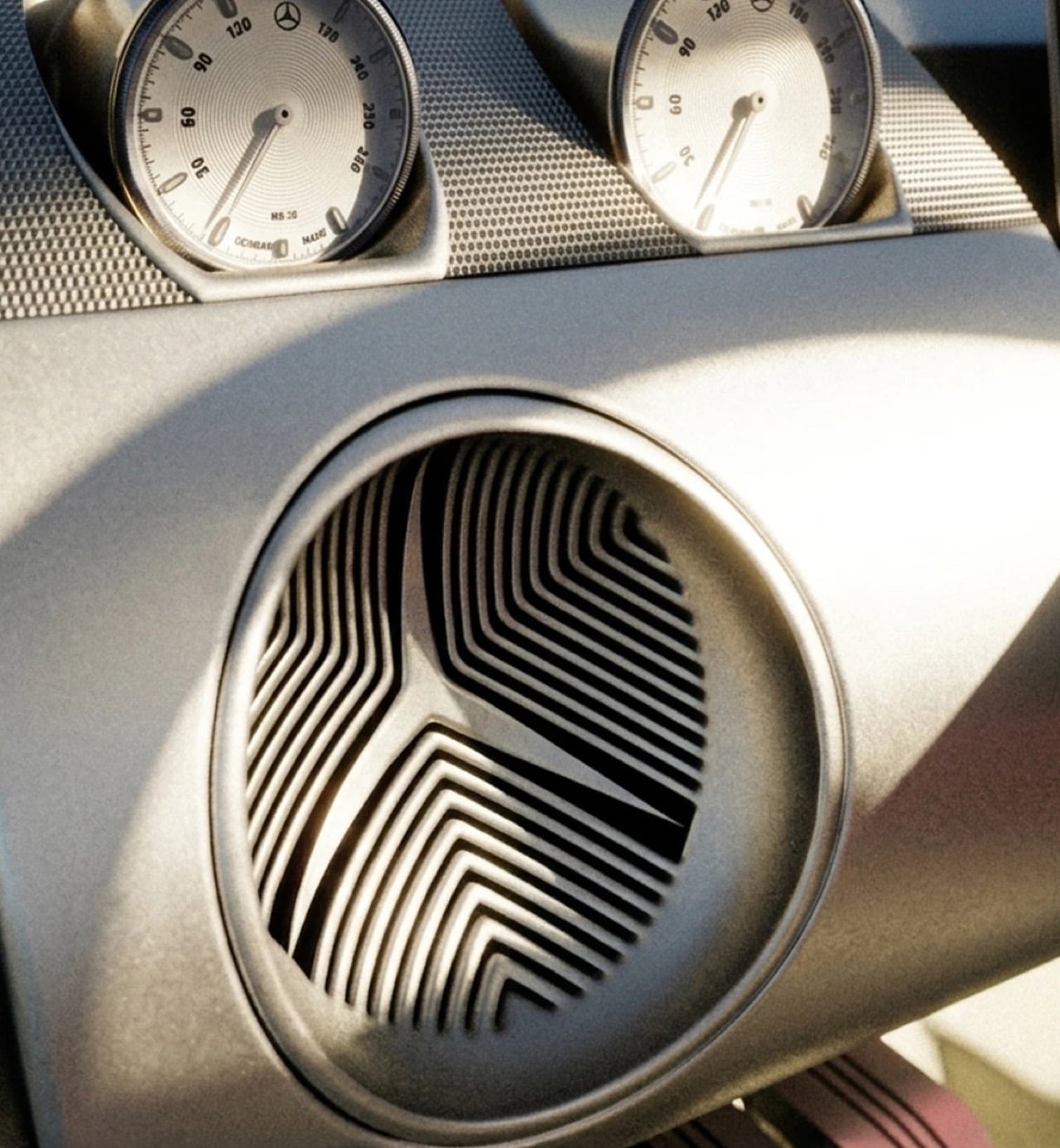
Inside, a twin dial gauge cluster sits behind a small, low steering wheel with the Mercedes badge centered at the hub, next to a strip of brushed metal toggle switches that look pulled from a vintage aircraft panel. A faceted shift knob rises from the center console, catching light the same way the exterior’s chrome finishes do. Quilted cream leather covers the seats and door panels, the only soft material in a cabin built mostly from metal and glass. Park pairs a 1950s instrument layout with materials that lean closer to a wristwatch than a dashboard. It reads more like a cockpit than a passenger cabin.
None of this comes from Mercedes, which is worth being clear about. Vision Timeless is Park’s MA thesis, modeled entirely in Blender 3D out of his studio in Paris, part of a growing pool of independent automotive renders, alongside work like Gabriel Naretto’s Uhlenhaut Shooting Brake, that look close enough to factory output to get mistaken for it. The render quality holds up under scrutiny: lighting, reflections, and material transitions are handled at a level that wouldn’t look out of place in an actual Mercedes press kit. Naretto’s Uhlenhaut leaned nostalgic. Park’s leans aggressive. Same heritage cues, two very different takes on what to do with them.
A grille this dense would be expensive to stamp or mold at scale, and a glass heavy cabin with doors this long would need real engineering before it met crash standards. That’s not really the point of a thesis project. Park set out to see how far a heritage shape could be pushed before it stopped looking respectful and started looking aggressive, and Vision Timeless answers that cleanly. The modernity over heritage framing he built this around reads less like an academic exercise and more like a real design position once you see the finished renders. Mercedes has used its own concepts, like the Vision Iconic, as farewell statements rather than production previews. Park doesn’t have that institutional backing, and the project doesn’t need it to land.
The post This might be the most bad-ass Mercedes-Benz Concept Car of all time… first appeared on Yanko Design.