
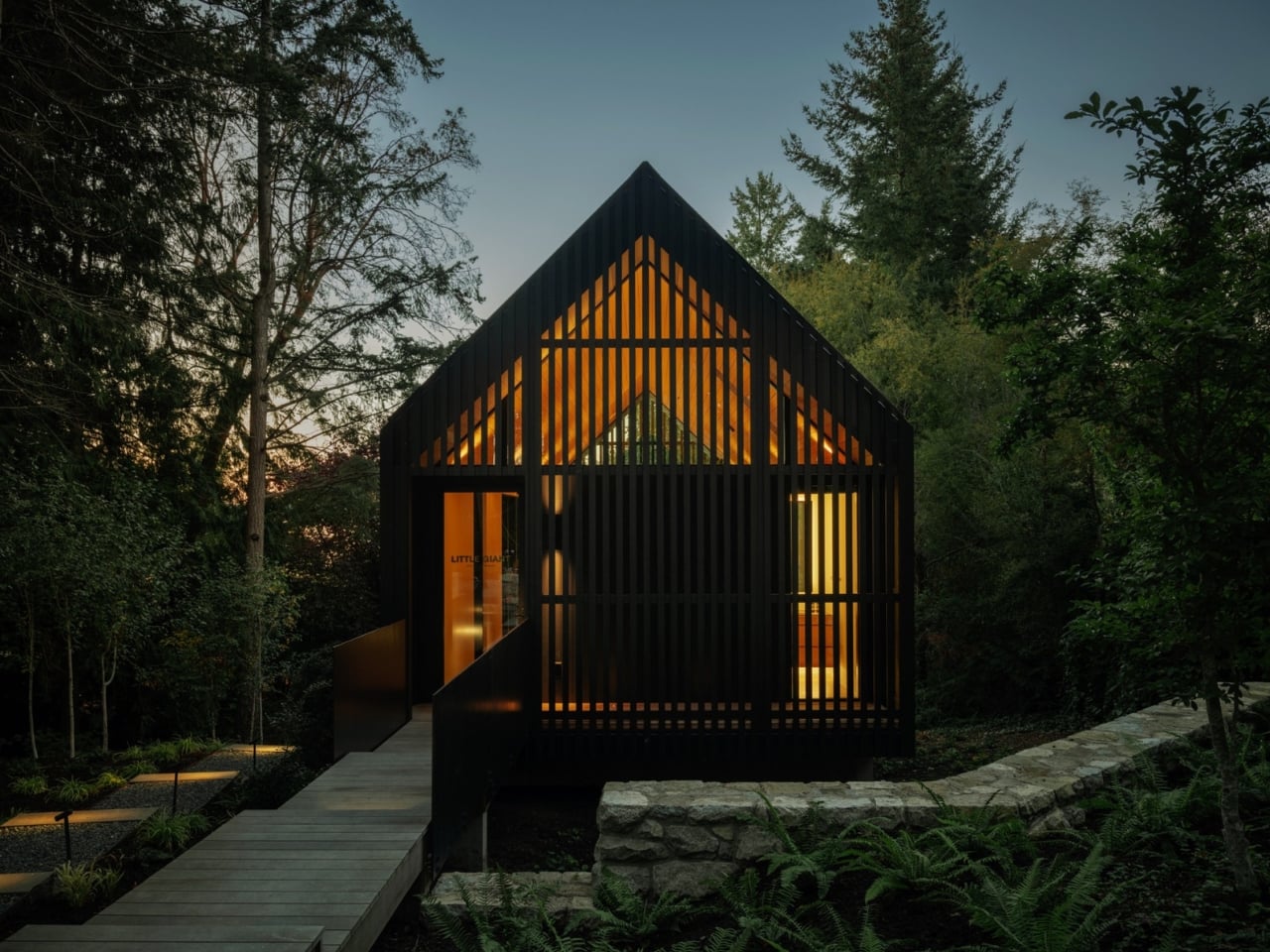
Most architects design spaces for other people. It’s the nature of the job. You read a brief, interpret a client’s vision, and find a way to translate someone else’s life into built form. So when Calgary-based studio Little Giant designed a workspace for themselves, perched above a forest floor on Vancouver Island, it felt less like a commission and more like a confession, a rare opportunity to say: this is actually what we believe. And what they believe, it turns out, is that quiet is not just a benefit of good design. It’s an ingredient.
Completed in 2024, the Forest Studio sits on a sloped, wooded peninsula just outside Victoria, British Columbia, tucked between cedar and Douglas fir trees on a site overlooking Saanich Inlet. At 967 square feet across two levels, it’s not a grand gesture. It doesn’t try to be. Founder and principal Mark Burkart describes the studio’s philosophy as “touching the ground lightly,” and that thinking is visible in nearly every decision made here.
Designer: Little Giant
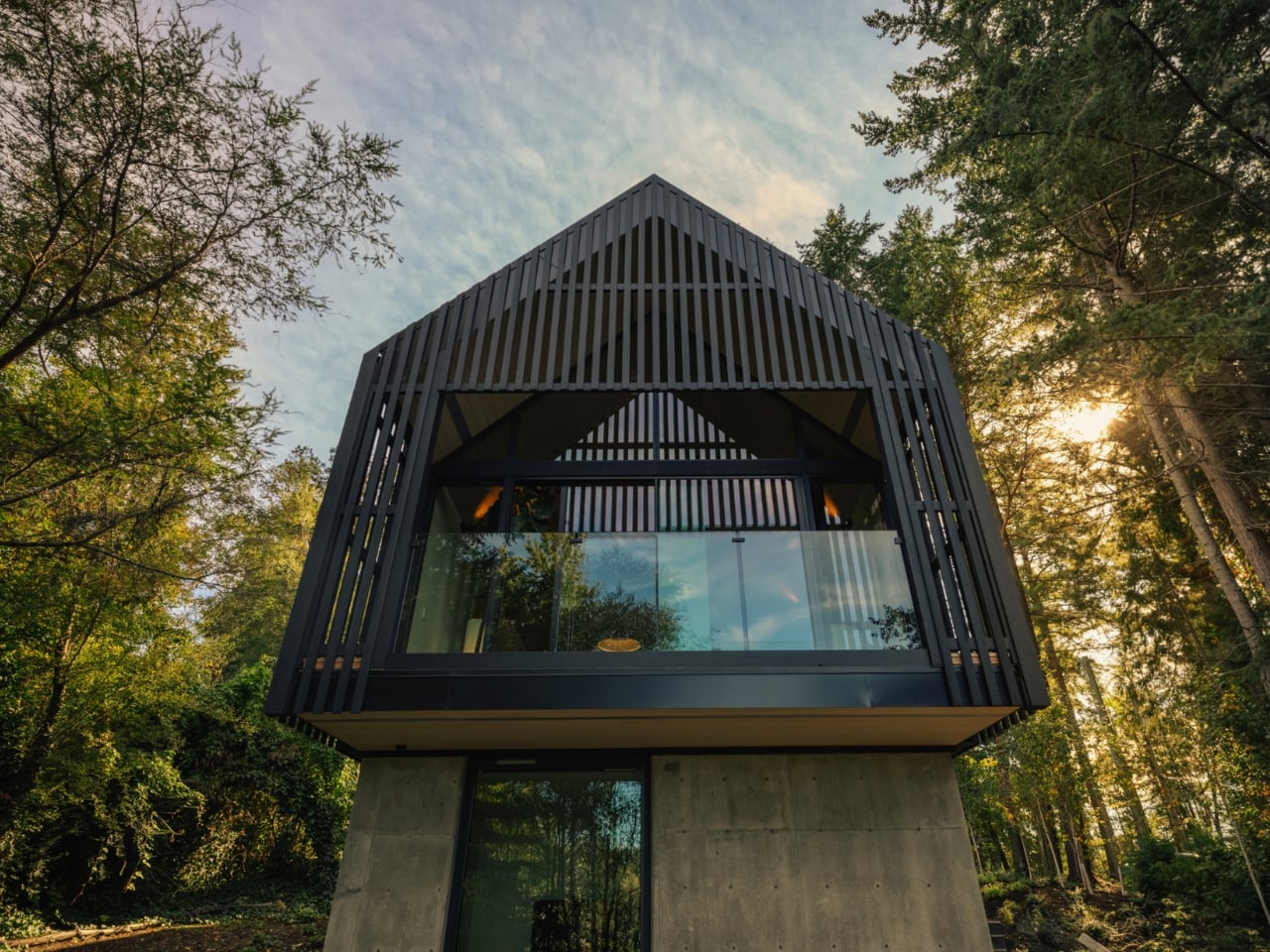
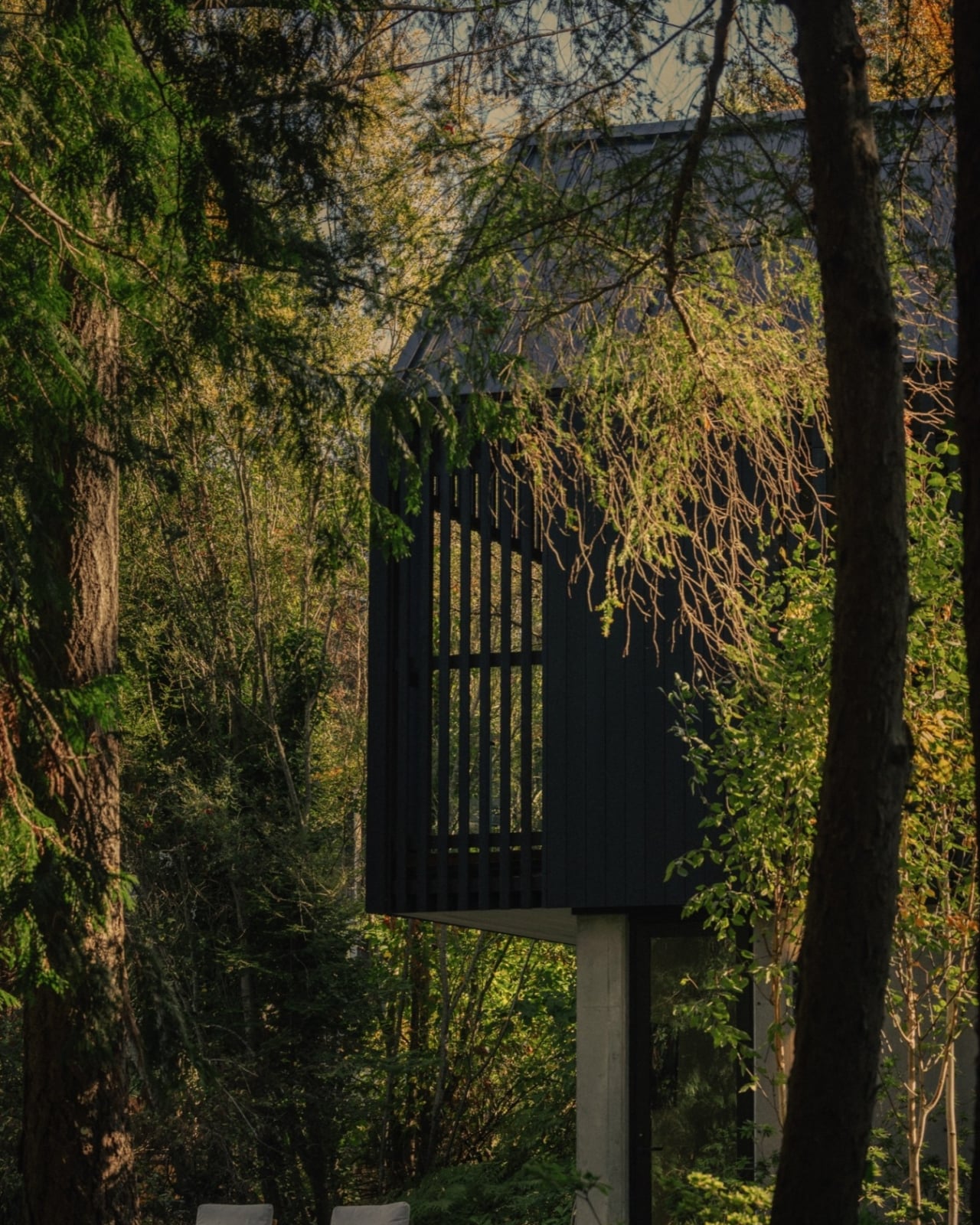
The building is accessed by an elevated walkway that heightens the sensation of arrival, as if you’re stepping into a treehouse rather than walking into an office. That’s deliberate. Little Giant drew on the “spirit of a treehouse” as the conceptual starting point, and the result is a structure that feels genuinely suspended within its environment. A recessed concrete base, tinted grey to echo the local rocky outcrops, anchors the lower level into the slope while the upper volume appears to float above the understory below. Cantilevered beams and parallel trusses keep the interior open, allowing daylight to filter through the gabled ends without interruption.
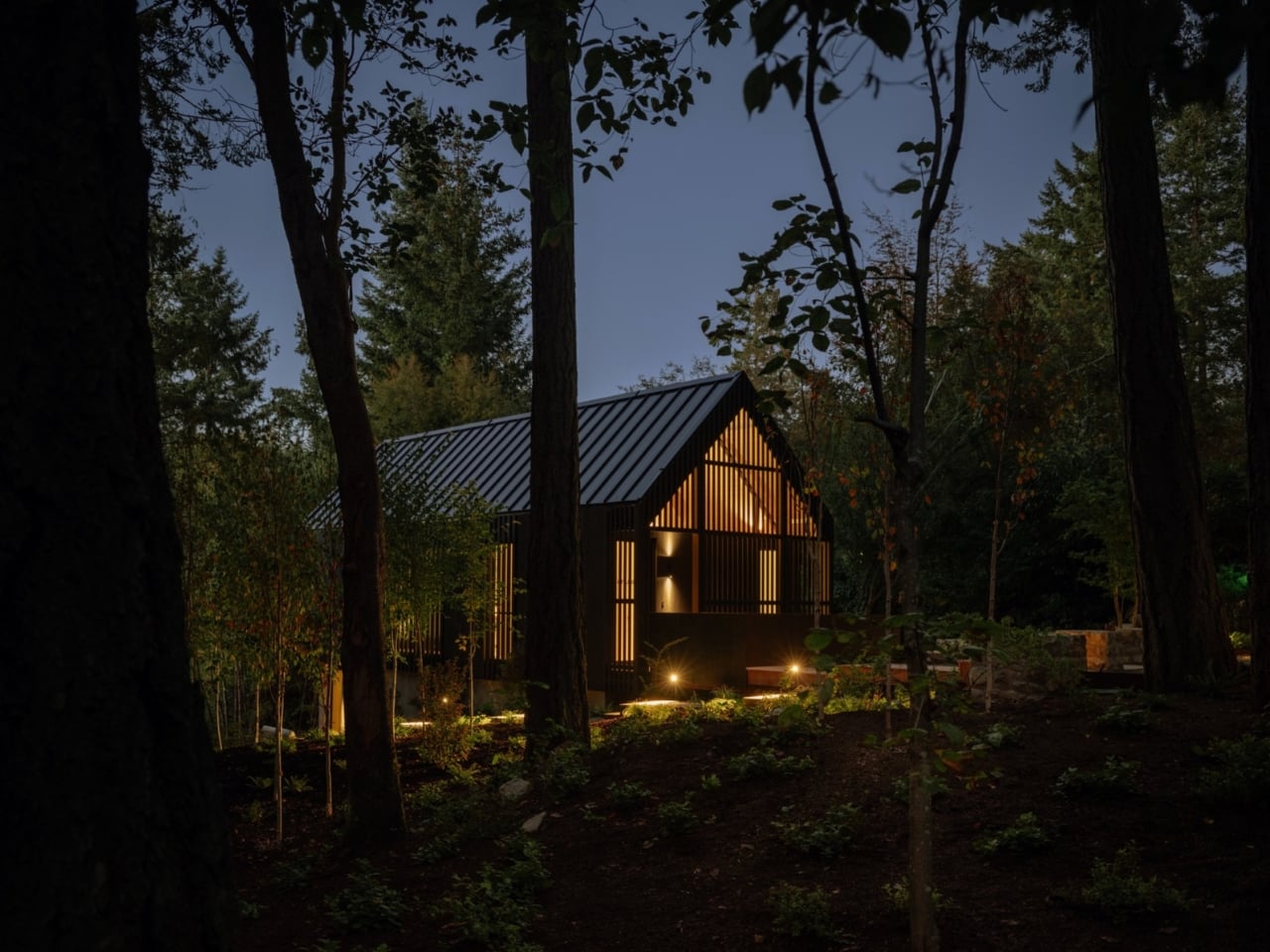
The exterior is the project’s most striking decision. Cedar siding and screens wrap the upper floor in deep charcoal, mirroring the verticality and tonal depth of the surrounding tree trunks. It’s a building that doesn’t announce itself. It absorbs. During the hours when light hits the forest at a low angle, it can almost disappear into the canopy entirely, which is exactly the point.
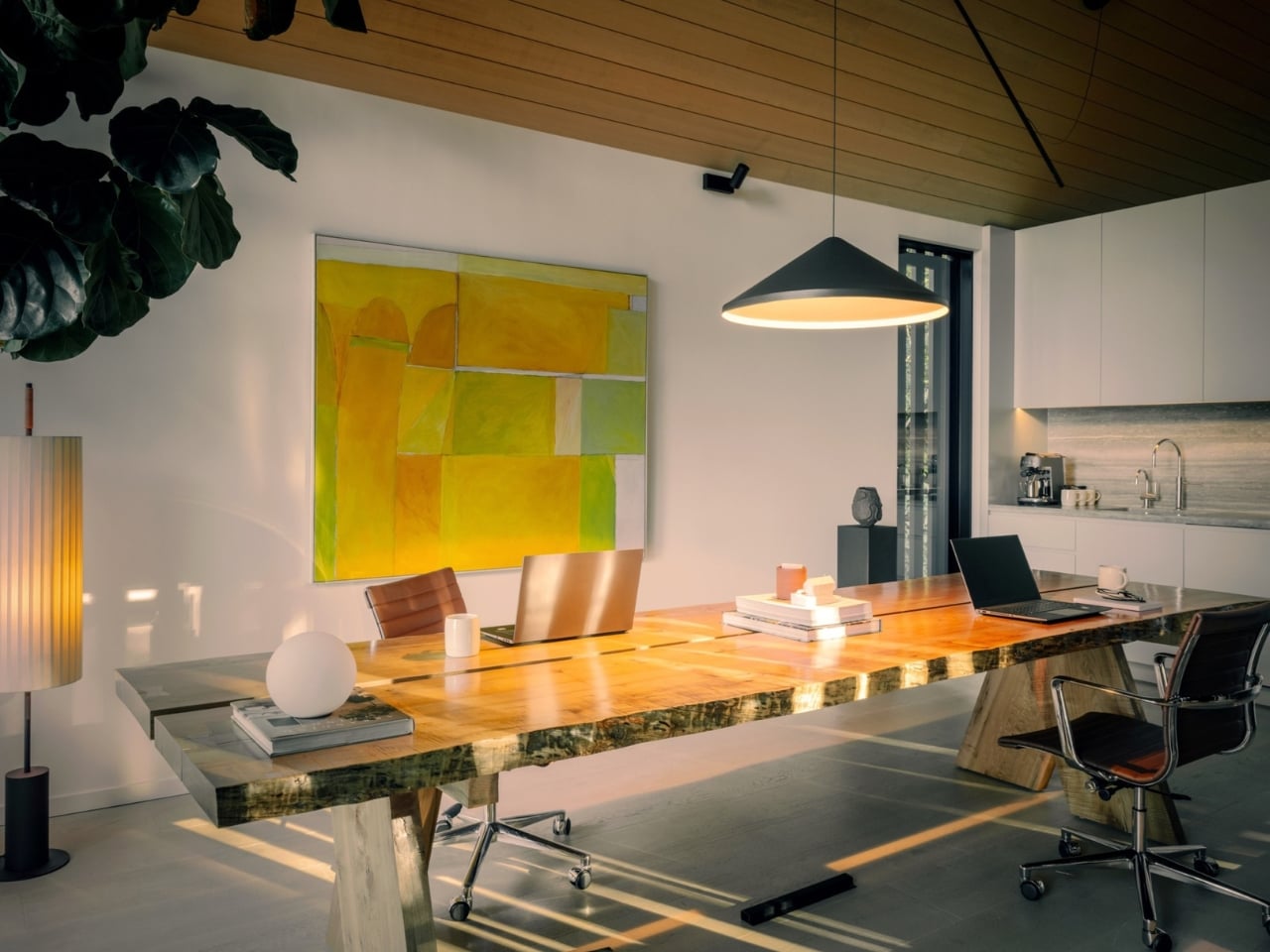
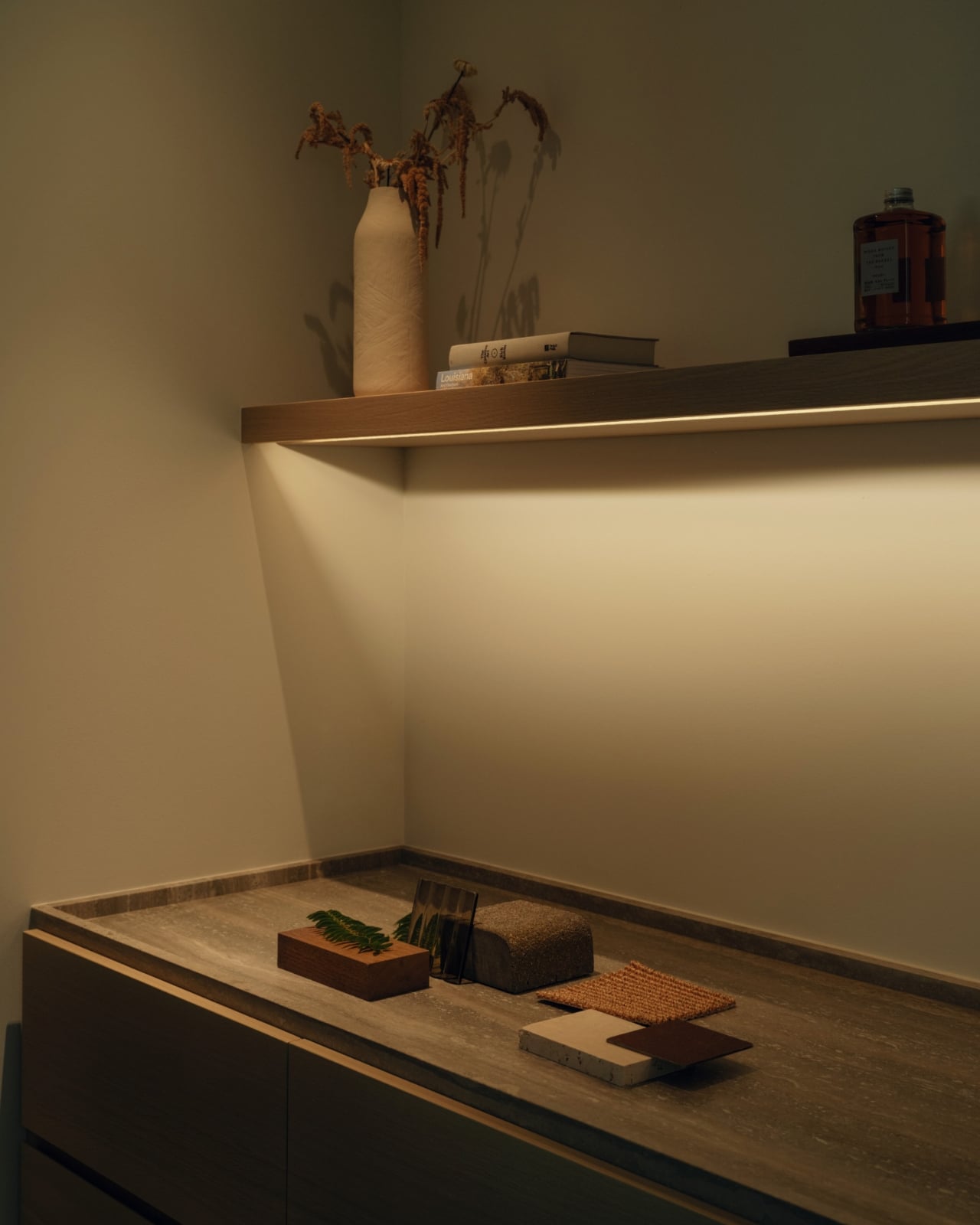
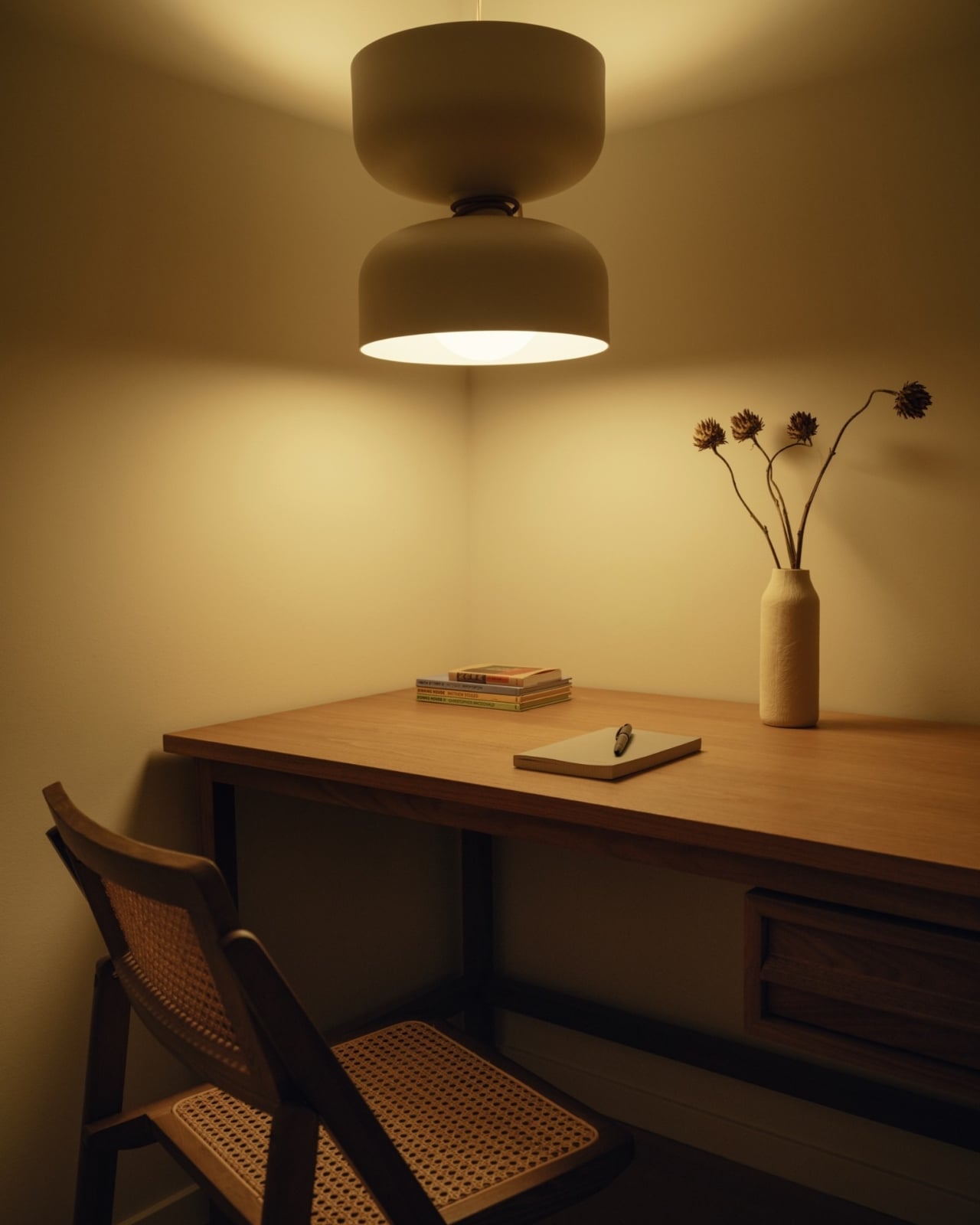
Inside, the material choices are just as considered. Light-hued finishes, hemlock ceilings, and travertine countertops build what Little Giant calls a feeling of “luminous neutrality,” a palette designed to receive the forest light rather than compete with it. The upper level holds a working studio, a kitchenette, a powder room, and a small room with a Murphy bed. A balcony extends the workspace into the treetops. The lower level is more flexible: currently a meeting room, it could just as easily become a bedroom, a bar, a recording space. The building was designed to evolve, and that flexibility is more forward-thinking than it might initially seem.
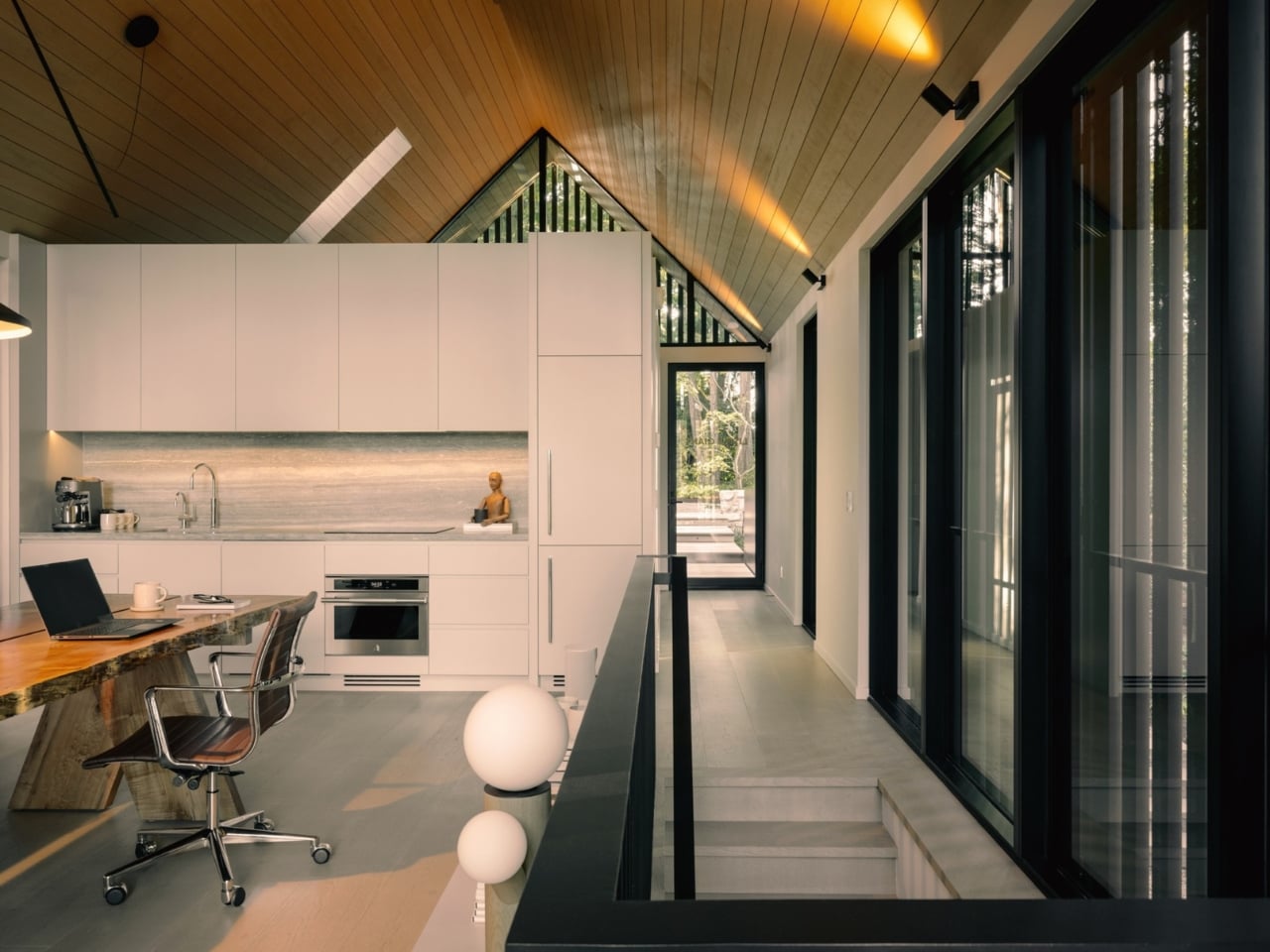
I keep returning to that adaptability as one of the more honest things about this project. So much of contemporary architecture is frozen at the moment of completion, fully resolved and unable to absorb change without a renovation. The Forest Studio, by contrast, was built with its own future in mind. Guest house, artist’s studio, rentable space: the options are baked in. That’s not hedging, it’s wisdom.
The studio’s reference points are grounded in regional history. Little Giant looked to the utilitarian structures of the Pacific Northwest, specifically historic timber mills and coastal canneries, not to reproduce them but to distill them into a spare, familiar silhouette. The gabled form feels native to the landscape without being nostalgic, and the decision to preserve the existing tree canopy rather than work around it adds to the sense that this building was invited in rather than imposed.
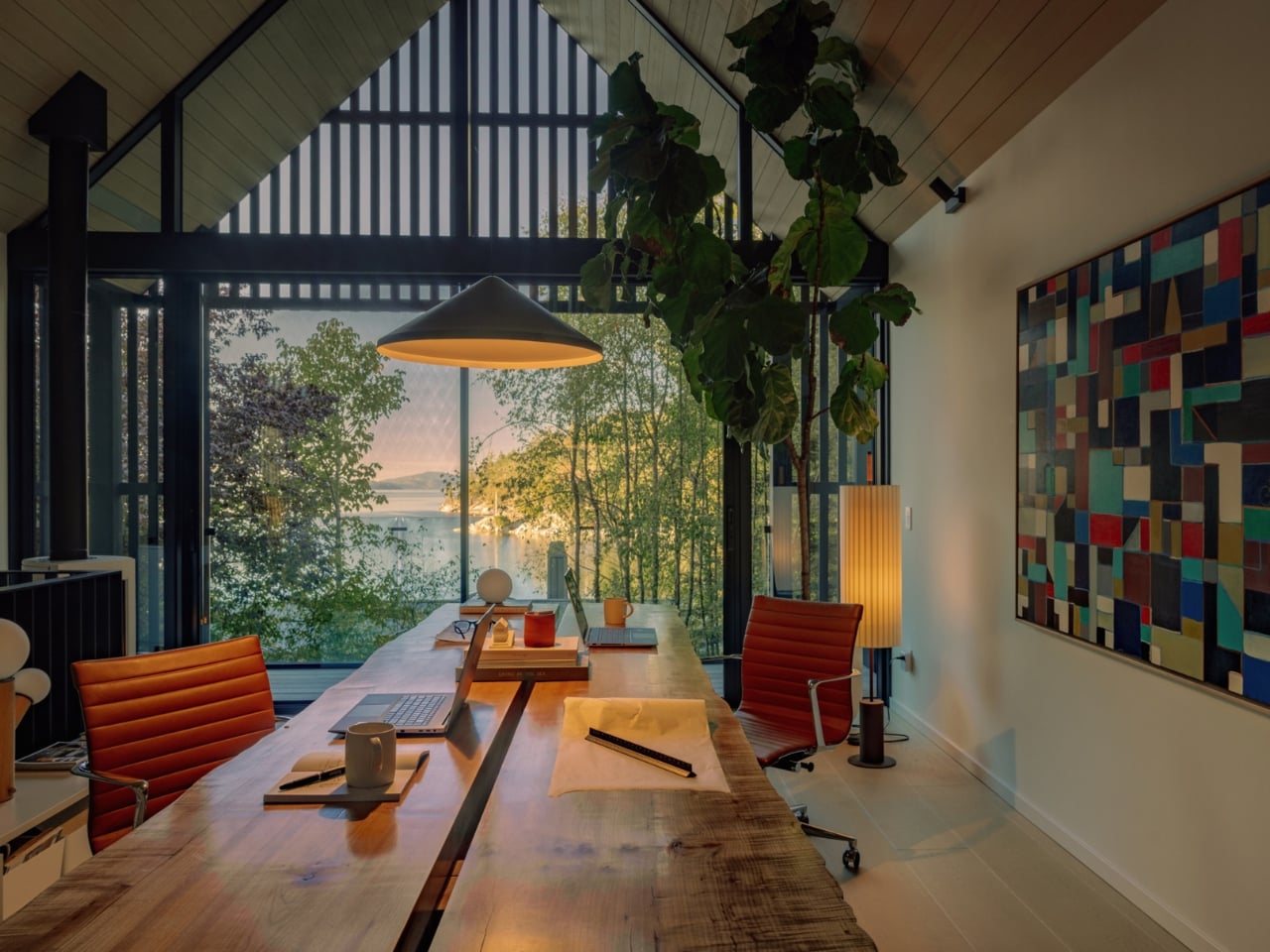
Burkart has said that the creative act at Little Giant is fundamentally an act of exploration. The Forest Studio is what happens when that idea is applied to the studio itself. It’s a building that asks a simple question: what would a workspace look like if it genuinely respected the land it stood on? The answer, apparently, looks like a treehouse with travertine countertops, filtered light, and a deep commitment to getting out of the forest’s way. That’s not a retreat from ambition. It’s a different kind of it.
The post Little Giant’s Forest Studio Has No Right to Be This Good first appeared on Yanko Design.